
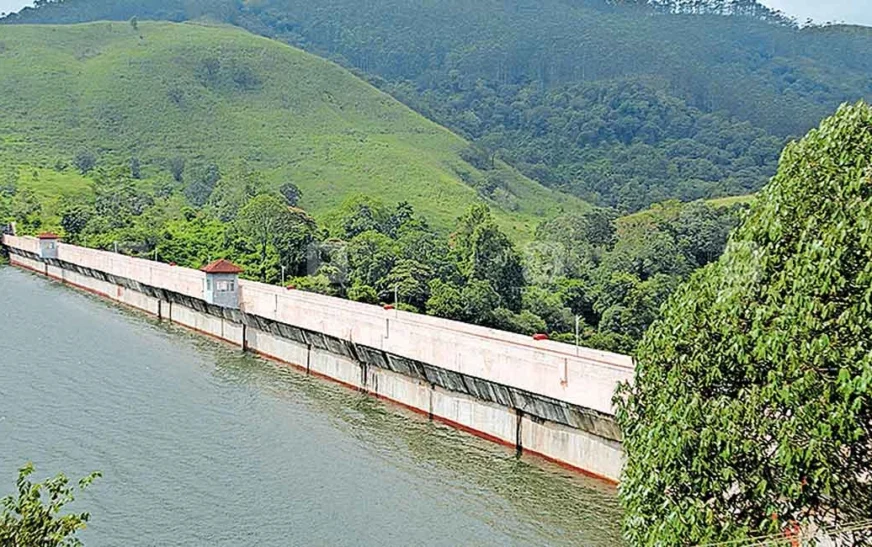
The long-running Mullaperiyar Dam dispute between Tamil Nadu and Kerala has resurfaced after the Tamil Nadu government reiterated its intention to increase the reservoir’s storage level to 152 feet. Kerala has strongly objected to the proposal, arguing that raising the water level in the century-old dam could pose serious safety risks to people living downstream.
The latest development follows statements by the Tamil Nadu government that it intends to pursue the maximum storage level permitted under its interpretation of Supreme Court rulings, while Kerala continues to advocate for the construction of a new dam to ensure public safety.
Tamil Nadu’s Position
The Tamil Nadu government maintains that increasing the water level to 152 feet is essential to meet irrigation and drinking water requirements in districts such as Theni, Madurai, Dindigul, Sivaganga, and Ramanathapuram, where lakhs of farmers depend on water released from the Mullaperiyar reservoir.
Officials argue that strengthening works carried out on the dam over the years have improved its structural stability and support their demand for restoring the original storage level.
Kerala’s Objections
Kerala has rejected the proposal, emphasizing that the 131-year-old masonry dam, located in a seismically sensitive region of Idukki district, should not be subjected to higher storage levels.
The state has consistently argued that while it has no objection to supplying water to Tamil Nadu, public safety must take precedence. Kerala has therefore reiterated its long-standing demand for constructing a new dam while continuing water supply to Tamil Nadu.
A Long-Running Interstate Dispute
The Mullaperiyar issue has remained one of India’s longest-running interstate water disputes.
- Tamil Nadu operates the dam under a historic lease agreement and seeks higher storage for irrigation.
- Kerala owns the land where the dam is located and focuses on structural safety and disaster preparedness.
- The matter has been the subject of multiple proceedings before the Supreme Court over the years.
Background
The Mullaperiyar Dam, constructed in 1895 across the Periyar River, diverts water from Kerala to Tamil Nadu for irrigation and drinking water purposes.
After safety concerns emerged in the late 20th century, the water level was reduced, and several strengthening measures were undertaken. Subsequent legal proceedings have addressed permissible storage levels, with the issue continuing to remain under judicial and administrative consideration.
Political and Public Significance
The issue remains politically sensitive in both states.
In Tamil Nadu, farmer groups continue to press for increased water storage to safeguard agricultural production, particularly during years of weak monsoon rainfall. In Kerala, political leaders across party lines have maintained that any increase in storage without addressing safety concerns is unacceptable.
What Happens Next?
The dispute is expected to remain under legal and administrative scrutiny. Any change in the dam’s operating level would likely require compliance with existing judicial directions and further coordination between the two state governments and the Centre.
For now, Kerala has reiterated its opposition to raising the storage level, while Tamil Nadu continues to pursue its demand for increased water availability from the Mullaperiyar reservoir.