
A Landmark Reform in Focus
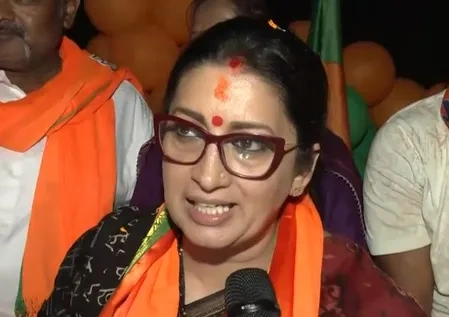
Union Minister Smriti Irani has described the Women’s Reservation Bill as a transformational step in India’s democratic journey, highlighting its significance in ensuring greater representation for women in legislative bodies.
The legislation, widely referred to as the Nari Shakti Vandan Adhiniyam, seeks to reserve 33% of seats in Parliament and state assemblies for women, marking a major structural reform in Indian politics.
A Tribute to Leadership
Smriti Irani credited Prime Minister Narendra Modi and the government for turning a long-pending demand into reality. She noted that the bill reflects the leadership’s commitment to empowering women beyond rhetoric and into decision-making roles.
According to Irani, the passage and implementation of the bill demonstrate political will and a vision to make governance more inclusive and representative.
From Promise to Policy
The Women’s Reservation Bill has been debated for decades, with several attempts made in the past without final implementation. Irani emphasised that under the current government, the proposal has moved from discussion to action.
She stated that this reform is not just about numbers, but about creating space for women to influence policy, governance, and national development.
Strengthening Democracy Through Inclusion
Irani highlighted that increasing women’s participation in politics will bring:
- diverse perspectives in policymaking
- stronger focus on social welfare and development
- improved representation of grassroots issues
She reiterated that women’s leadership is essential for building a balanced and progressive society.
Political and Social Impact
The implementation of the bill is expected to significantly increase the number of women lawmakers across the country. It also aligns with the broader vision of women-led development, a theme consistently emphasised by the government.
Irani noted that empowering women politically will have a cascading effect on economic and social indicators, strengthening India’s overall growth trajectory.
A Defining Policy Shift
Smriti Irani’s remarks place the Women’s Reservation Bill within a broader policy framework focused on institutional inclusion.
The emphasis now moves to implementation — particularly the delimitation process and the effective allocation of reserved seats.
The measure is expected to reshape legislative representation over time, with implications for governance, policymaking, and political participation.
As the process advances, the focus will remain on execution, timelines, and measurable outcomes.The bill marks a structural shift — its long-term impact will depend on how consistently it is implemented across electoral cycles