
Namo Bharat Times | International Desk
In a significant escalation of the ongoing Russia–Ukraine conflict, Ukrainian drones struck a major oil terminal and military-linked infrastructure in St. Petersburg, Russia’s second-largest city, on Wednesday. The attack occurred just hours before the opening of the prestigious St. Petersburg International Economic Forum, often referred to as Russia’s version of “Davos.”
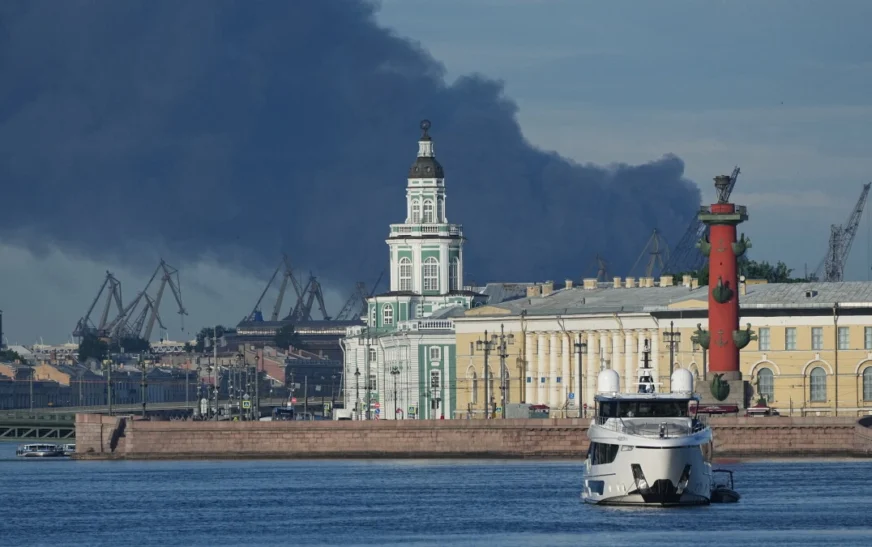
According to Russian officials, multiple infrastructure facilities were targeted across the city and surrounding areas. A major fire broke out at the St. Petersburg Oil Terminal, a strategically important facility that plays a key role in Russia’s fuel export operations through the Baltic region. Thick black smoke was seen rising above the city skyline as emergency services rushed to contain the blaze.
Ukraine later confirmed the strike, with President Volodymyr Zelenskyy stating that the operation targeted facilities supporting Russia’s military and energy infrastructure. Ukrainian officials also claimed that military targets at the Kronstadt naval base were hit during the operation.
Russian authorities reported that air defence systems intercepted dozens of drones overnight. While several people were injured, officials stated that no fatalities had been reported. Flight operations at St. Petersburg’s Pulkovo Airport were temporarily disrupted, and mobile internet services were reportedly restricted in parts of the city following the attacks.
The timing of the strike is particularly significant. The St. Petersburg International Economic Forum serves as one of President Vladimir Putin’s most important international events, aimed at showcasing Russia’s economy and attracting global investment. The attack has raised fresh questions about Russia’s ability to protect critical infrastructure deep inside its territory, nearly 1,100 kilometres from the Ukrainian border.
As both nations continue to intensify long-range attacks, the latest strike highlights the changing nature of modern warfare, where economic assets and strategic infrastructure have become increasingly important targets alongside traditional military objectives. The conflict, now well into its fifth year, shows little sign of de-escalation despite ongoing diplomatic efforts.