
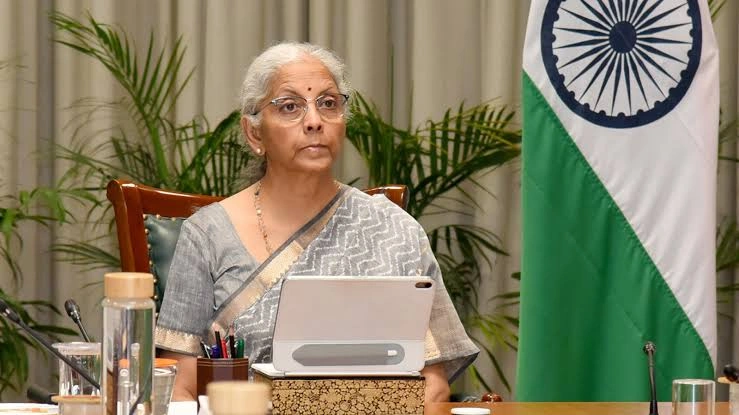
Finance Minister Nirmala Sitharaman is set to introduce the Taxation and Other Laws (Amendment) Bill, 2026 in the Lok Sabha as part of the government’s legislative agenda during the ongoing Monsoon Session of Parliament. The proposed legislation aims to amend several taxation and financial laws, forming a key component of the Centre’s broader efforts to modernize India’s tax framework and improve the ease of doing business.
The Lok Sabha is also scheduled to take up discussions on Excess Demands for Grants for the financial year 2022–23, followed by the introduction of the Appropriation Bill to authorize the expenditure.
Key Legislative Business in Lok Sabha
According to the day’s business agenda, the House will consider several important financial matters, including:
- Introduction of the Taxation and Other Laws (Amendment) Bill, 2026.
- Discussion and voting on Excess Demands for Grants (2022–23).
- Introduction and consideration of the Appropriation Bill to regularize government expenditure.
These measures are part of Parliament’s routine financial oversight while also advancing the government’s economic reform agenda.
Purpose of the Amendment Bill
The Taxation and Other Laws (Amendment) Bill, 2026 seeks to amend provisions in existing tax-related legislation.
According to government sources, the proposed changes are intended to simplify tax administration, improve regulatory clarity, strengthen the investment climate, and align tax laws with evolving economic priorities. The Bill also supports the government’s objective of making India’s tax system more efficient and investor-friendly.
Focus on Investment and Manufacturing
The proposed amendments are expected to include measures that encourage:
- Domestic manufacturing.
- Foreign direct investment (FDI).
- Global fund management activities.
- Simplified tax compliance.
- Greater certainty for investors.
Experts believe these reforms could improve India’s competitiveness as a global investment destination while reducing regulatory complexity.
Parliament’s Financial Oversight
Apart from introducing new legislation, Parliament will also examine Excess Demands for Grants, a constitutional mechanism through which the government seeks approval for expenditure that exceeded the amount originally authorized for a financial year.
Following this discussion, the Appropriation Bill will be taken up to provide the necessary legal authorization for the expenditure already incurred.
Part of Broader Tax Reforms
The proposed amendment follows a series of tax reforms undertaken by the government in recent years, including efforts to reduce tax litigation, simplify compliance, digitize tax administration, and improve the overall business environment. Recent policy measures have also focused on attracting offshore investment funds and streamlining direct tax provisions.
What Happens Next?
Once introduced in the Lok Sabha, the Taxation and Other Laws (Amendment) Bill, 2026 will proceed through the parliamentary process, including debate, consideration, and voting before being sent to the Rajya Sabha.
The Bill is expected to play an important role in shaping India’s tax and financial regulatory framework, while complementing the government’s broader strategy of promoting investment, economic growth, and fiscal efficiency.