
Mohan Bhagwat’s interaction with students reflects a larger conversation about parenting, leadership and the future of India’s youth
For generations, Indian families raised children with a simple expectation—listen first, question later.
Respect for elders, discipline and obedience formed the foundation of upbringing across homes, schools and communities. It was a culture where authority was rarely challenged, and values were often transmitted through instruction rather than discussion.
Today’s generation, however, is different.
Generation Z does not reject values. It seeks explanations.
It asks questions.
It wants to understand before it accepts.
This shift is not unique to India. It is a global generational change. The challenge before every institution—family, school, society and even ideological organisations—is learning how to communicate with a generation that values dialogue over direction.
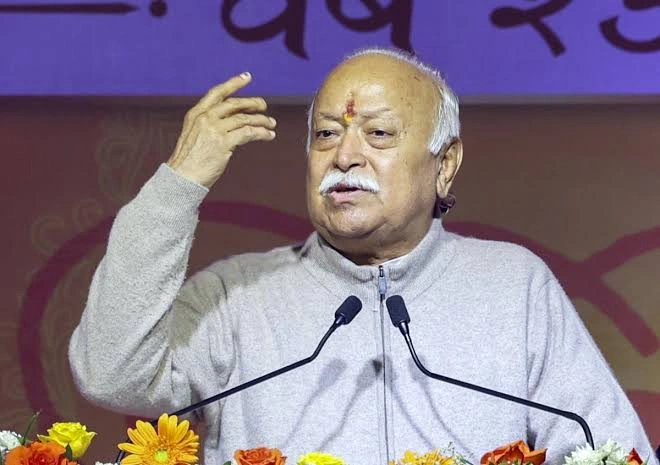
It is against this backdrop that Rashtriya Swayamsevak Sangh (RSS) Sarsanghchalak Dr. Mohan Bhagwat’s decision to address around 2,000 young students on August 6 assumes significance. The interaction follows his recent remarks that the era of unquestioned obedience has passed and that today’s youth need explanation, affection and discussion rather than commands.
A Generation That Wants to Understand
Speaking recently, Dr. Bhagwat observed that when his generation was young, obedience was expected. Today’s young people, he said, seek logic, conversation and meaningful engagement. Rather than viewing this as indiscipline, he suggested that elders must adapt by building trust and offering credible examples.
This observation extends beyond politics or ideology.
Parents experience it at home.
Teachers experience it in classrooms.
Employers experience it in workplaces.
Young people today are exposed to information from countless sources. They compare ideas, challenge assumptions and expect their questions to be answered with patience rather than authority.
The RSS and the Idea of Character Building
For nearly a century, the RSS has described one of its core objectives as character building through discipline, service, physical activity and community engagement. Supporters point to its emphasis on punctuality, teamwork, volunteerism and social responsibility as qualities that have influenced generations of swayamsevaks.
Whether one agrees with the organisation’s ideology or not, its sustained focus on youth engagement has remained one of its defining characteristics.
The decision to engage directly with Gen Z reflects an acknowledgment that methods of communication must evolve alongside society.
Leadership Begins with Listening
One of the most striking aspects of Dr. Bhagwat’s recent remarks is the emphasis on listening.
Leadership in the twenty-first century is increasingly measured not by how effectively leaders issue instructions, but by how well they engage, explain and inspire.
Young people are more likely to respond when they feel heard.
They are more likely to accept responsibility when they understand its purpose.
In this sense, dialogue becomes an instrument of leadership rather than a sign of weakened authority.
Discipline in a Different Era
Discipline itself has not become outdated.
Its meaning has changed.
Yesterday’s discipline may have been built on compliance.
Today’s discipline is more likely to emerge from conviction.
When young people understand why something matters, they are often willing to commit to it with greater sincerity than when they are simply instructed to obey.
This shift has implications not only for organisations but also for schools, universities and families.
Beyond Ideology
The significance of the August 6 interaction lies not only in who is speaking but also in what it represents.
India is home to one of the world’s youngest populations. Addressing issues such as purpose, responsibility, emotional resilience, leadership and civic participation requires continuous engagement with young people from diverse backgrounds.
No single institution can meet that challenge alone.
Families, educational institutions, community organisations, cultural groups and public leaders all have a role to play.
The Larger Lesson
The conversation initiated by Dr. Bhagwat reflects a broader truth of contemporary India.
The future will not be shaped merely by asking young people to follow.
It will be shaped by helping them understand.
Every generation inherits values.
But every generation also requires those values to be explained in the language of its own time.
Perhaps that is the larger message emerging from this moment: the strongest leadership is not built on unquestioned obedience, but on trust earned through dialogue, example and patient engagement.