
A historic Commonwealth Games campaign has raised hopes for the Asian Games and the road to Los Angeles 2028
There are victories that bring medals.
And then there are victories that change the direction of a sport.
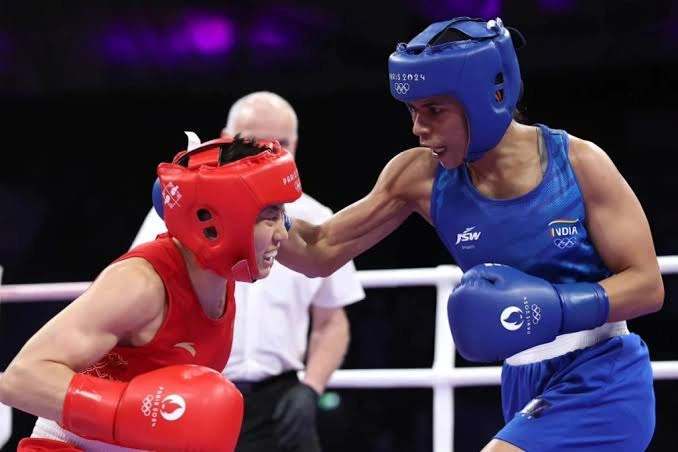
India’s women boxers have done precisely that at the 2026 Commonwealth Games in Glasgow, producing one of the finest performances in the nation’s boxing history. The Indian boxing contingent finished with a record 10 medals, including seven golds and three silvers, making it India’s most successful boxing campaign in Commonwealth Games history.
Beyond the medal tally lies a deeper story—one of discipline, preparation, fearless young athletes and a coaching philosophy focused not merely on winning today, but building champions for tomorrow.
More Than Medals
For head coach Santiago Nieva, the Commonwealth Games were never meant to be the final destination.
Reflecting on the campaign, Nieva described the medals as an important achievement but reminded everyone that they are “not the Olympics” and should be viewed as the result of sustained preparation rather than the ultimate objective. His emphasis remains firmly on developing athletes capable of succeeding consistently on the biggest global stages.
That perspective explains why India’s boxing programme has steadily evolved over the past few years.
The focus is no longer on producing one or two exceptional champions.
It is about creating depth across multiple weight categories.
A New Generation Steps Forward
Perhaps the most encouraging aspect of India’s success is the emergence of a new generation of women boxers.
Alongside established names, young athletes have demonstrated remarkable composure under pressure, technical maturity and the confidence to dominate international opponents.
Victories such as Sakshi Chaudhary’s gold medal in the women’s 51 kg category and several other commanding performances underline the strength of India’s emerging talent pipeline.
This is no longer a team dependent on individual brilliance.
It is becoming a system capable of producing champions consistently.
Preparation Beyond the Ring
Success in elite sport rarely happens by accident.
Before arriving in Glasgow, the Indian team completed an intensive multinational training camp in Belfast, gaining valuable sparring experience against international opponents.
Even logistical disruptions upon arrival did little to affect the team’s focus. Coach Nieva maintained that the athletes were physically prepared, mentally composed and confident of delivering strong performances.
That preparation was visible inside the ring.
The boxers displayed tactical maturity, discipline and resilience throughout the competition.
The Asian Games Will Be the Real Test
If the Commonwealth Games demonstrated India’s strength, the Asian Games will test its consistency.
Asian boxing remains one of the most competitive arenas in the world, with traditional powerhouses such as Kazakhstan, Uzbekistan, China, North Korea and Thailand regularly producing Olympic and world champions.
The level of competition rises significantly.
Every bout becomes a test of technique, endurance and mental toughness.
India’s recent performances suggest that the team enters the Asian Games with genuine medal prospects—but also with an awareness that greater challenges lie ahead. Coach Nieva has consistently stressed that complacency has no place in a programme preparing for global competition.
Looking Towards Los Angeles
Every international tournament now serves another purpose.
Preparation for the Los Angeles 2028 Olympic Games.
Olympic success demands more than talent.
It requires sustained exposure to elite competition, world-class coaching, scientific training, sports psychology and careful athlete management over several years.
That long-term approach is central to Nieva’s philosophy.
His message has remained consistent: every nation will improve before the Olympics, and India must improve faster than everyone else.
The Rise of Women’s Boxing in India
Indian women’s boxing has travelled a remarkable journey.
From the pioneering achievements of legends such as M.C. Mary Kom, the sport has evolved into a system producing champions across multiple weight divisions.
Today’s generation competes with greater confidence because it stands on the foundation built by those who came before.
The success witnessed in Glasgow is therefore not merely a sporting achievement.
It is evidence that Indian women’s boxing has matured into one of the country’s strongest high-performance programmes.
The Fight Has Only Begun
The Commonwealth Games have given India every reason to celebrate.
But the celebration must now give way to preparation.
The Asian Games await.
Beyond them lies the Olympic dream.
If Glasgow showcased India’s potential, the coming years will determine whether this generation can transform promise into lasting sporting history.
For now, one thing is clear.
India’s boxing queens are no longer emerging contenders.
They are among the standard-bearers of Indian sport—and they have shown that the biggest victories may still be ahead.