
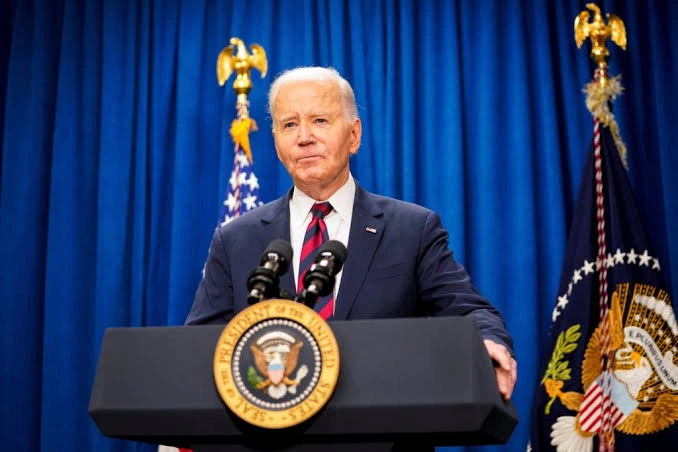
Newly released audio recordings and interview transcripts featuring former U.S. President Joe Biden and his memoir ghostwriter Mark Zwonitzer have drawn renewed attention after revealing conversations involving potentially sensitive government information. The recordings, made between 2016 and 2017 while Biden was working on his memoir Promise Me, Dad, were released following a lengthy legal battle over public access to the material.
The recordings had previously been reviewed during Special Counsel Robert Hur’s investigation into Biden’s handling of classified documents. Although Hur concluded that criminal charges were not warranted, the tapes have reignited political debate over the former president’s handling of sensitive material and his memory during the interviews.
What the Recordings Reveal
According to the released audio and transcripts, Biden discussed personal notebooks and documents from his time as a U.S. senator and vice president while speaking with Zwonitzer.
In one portion of the recording, Biden acknowledges that some of the material “may be classified”, cautioning his ghostwriter to be careful when reviewing certain notes. The interviews also contain discussions of foreign policy decisions and other government-related matters from Biden’s years in public office. Large sections of the recordings remain redacted because they contain sensitive information.
Connection to the Classified Documents Investigation
The interviews became a key part of Special Counsel Robert Hur’s investigation into Biden’s retention of classified documents after leaving the vice presidency.
Hur’s 2024 report concluded that there was evidence Biden had retained and, in some instances, disclosed information from notebooks containing classified material. However, prosecutors ultimately decided not to file criminal charges, citing insufficient evidence to prove intentional wrongdoing beyond a reasonable doubt.
Questions Over Memory and Recall
The recordings also include moments where Biden appears to struggle to recall certain dates, names, and events. These excerpts have attracted renewed political attention because Hur’s report referenced Biden’s memory while explaining the decision not to prosecute.
At the same time, the recordings also show Biden recalling many complex policy discussions and historical events in considerable detail, providing a broader picture than isolated clips alone.
Legal Battle Over the Recordings
The audio recordings remained private for several years before becoming the subject of a court dispute.
Biden had sought to prevent their release, arguing that the interviews were private conversations conducted while preparing a memoir. However, after a federal appeals court ruled there was substantial public interest in disclosure, Biden withdrew his legal challenge, allowing the Justice Department to release the recordings and transcripts.
Political Reactions Continue
The release has prompted differing political responses.
Republican lawmakers and conservative groups argue that the recordings reinforce concerns raised during the classified documents investigation and raise additional questions about Biden’s handling of sensitive information.
Meanwhile, Biden’s representatives have criticised the publication of the tapes, describing it as politically motivated and arguing that the recordings have been taken out of context. They maintain that the former president did not intentionally disclose classified information and note that no classified material ultimately appeared in his published memoir.
Why the Recordings Matter
The recordings have become part of the broader public discussion surrounding transparency, the handling of classified documents by senior public officials, and the legal standards governing such cases. They also revisit issues that were central to Special Counsel Hur’s investigation and remain politically significant in the United States.
While the audio has generated renewed scrutiny, the legal conclusion of the classified documents investigation remains unchanged: no criminal charges were filed against Biden. The released recordings nevertheless provide additional insight into the conversations that formed part of one of the most closely watched federal investigations involving a former U.S. president.