
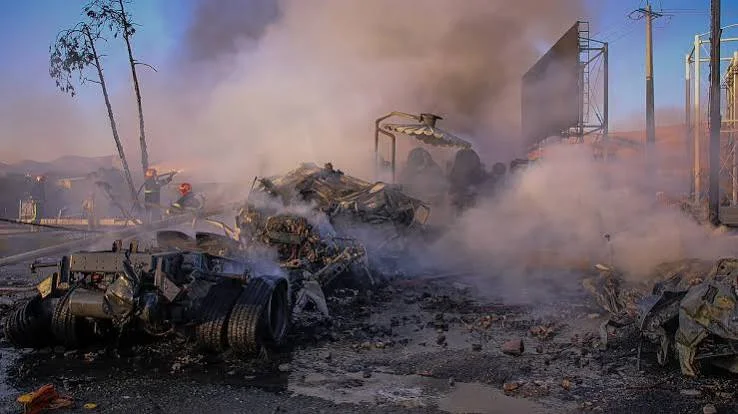
The confrontation between Iran and the United States has entered a more dangerous phase after Iran launched ballistic missiles at a US military facility near Al Azraq in Jordan, following American strikes that destroyed five Iranian oil tankers. The latest exchange marks a significant expansion of the conflict beyond Iranian waters and raises the risk of a wider regional war.
Jordanian authorities said their air defences intercepted 18 of the 20 missiles fired toward the kingdom, while two landed in unpopulated areas. No casualties were reported. Iran’s Revolutionary Guard, however, claimed its missiles caused significant damage to facilities used by US forces. Those claims have not been independently verified.
The Iranian response came after the US military said it had destroyed five Iranian oil tankers. Washington described the strikes as retaliation for Iranian ballistic-missile attacks against a US Navy warship. US officials said the crews were given evacuation warnings before the vessels were struck and that no American personnel were injured.
The confrontation is also spreading into the Strait of Hormuz, one of the world’s most important energy corridors. Iran has threatened commercial shipping and attacked vessels in the waterway, while the US has sought to maintain maritime access. The latest escalation has pushed Brent crude toward $100 a barrel as markets price in the possibility of prolonged supply disruption.
For Jordan, the developments create a difficult security dilemma. The country hosts US forces but has repeatedly stressed that it is not seeking direct involvement in the wider conflict. Continued attacks could nevertheless turn Jordan into an increasingly important front in the US-Iran confrontation.
The immediate concern is no longer a single exchange of strikes. With military assets, oil tankers and critical shipping routes now involved, each retaliatory move carries the potential to trigger a much broader regional crisis.