

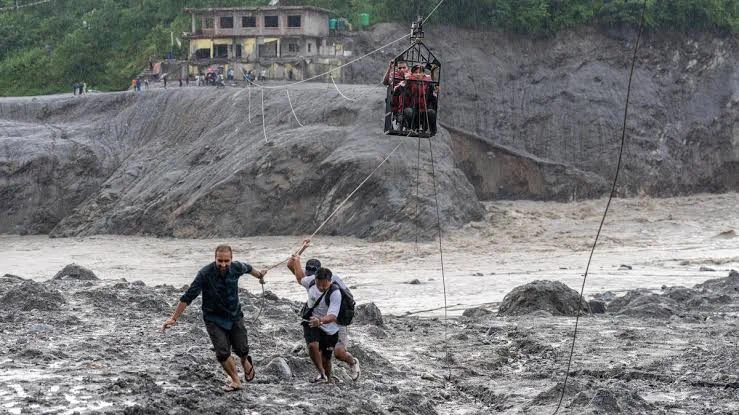
Nepal’s devastating flash floods have triggered a massive rescue and relief operation, with authorities racing to locate survivors and thousands of people still reported missing after the Himalayan disaster.
The floods struck on August 26 after a glacial collapse near the Nepal-China border sent huge volumes of water, ice, mud and debris through valleys and communities. The disaster has caused widespread destruction across Nepal and neighbouring Tibet.
Rescue Operations Focus on Hydropower Tunnels
One of the biggest challenges for rescuers is reaching workers believed to be trapped inside hydropower project tunnels. Search teams are using excavators, heavy machinery, helicopters and specialised equipment to access blocked areas.
International assistance has also increased, with teams and support coming from countries including India, China, South Korea and Singapore. India has deployed specialised rescue and forensic teams, while hundreds of Indian nationals have already been rescued.
Thousands Remain Missing
The scale of the disaster remains difficult to measure because several affected areas are remote and communications and transport infrastructure have been badly damaged.
Recent reports put Nepal’s confirmed death toll above 1,200, while more than 4,000 people remain missing.
The disaster has also damaged roads, bridges, power infrastructure and hydropower projects, creating additional difficulties for emergency teams.
A Major Humanitarian Challenge
The Nepal floods are now developing into a long-term humanitarian and reconstruction crisis. Beyond finding survivors, authorities face the challenge of providing shelter, food, medical assistance and psychological support to displaced communities.
The disaster also highlights the growing risks facing Himalayan communities from glacial instability, extreme weather and climate-related hazards.
For Nepal, the immediate priority remains saving lives. But once rescue operations conclude, rebuilding damaged infrastructure and strengthening early-warning systems will be critical.
The Nepal flash floods are not only a national tragedy but a warning for the wider Himalayan region about the urgent need for stronger disaster preparedness and climate resilience.