
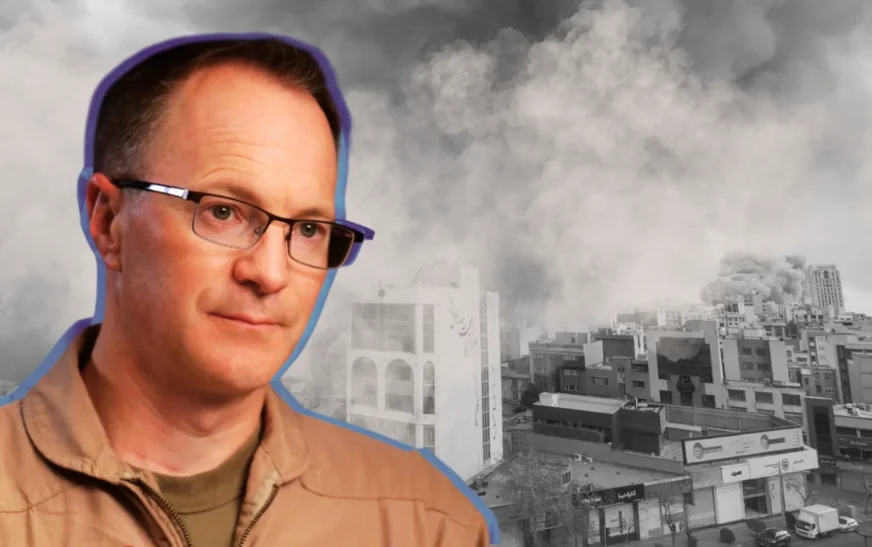
A US Air Force officer’s account of surviving nearly 50 hours inside Iran after his F-15E Strike Eagle was shot down has offered a rare glimpse into the dangers faced by military personnel stranded behind enemy lines. Identified by his mission call sign “Dude 44 Bravo,” the weapons-systems officer survived while injured and being hunted by Iranian forces before a complex US rescue operation brought him home.
The incident occurred during a US strike mission in April, when the F-15E was reportedly shot down roughly 100 miles inside southern Iran. Both crew members ejected, but while the pilot was recovered within hours, the weapons-systems officer remained missing in the mountainous terrain. He ultimately spent about two days hiding from Iranian search teams.
His survival was not simply a matter of luck. The officer relied heavily on specialised SERE — Survival, Evasion, Resistance and Escape — training to remain concealed while injured. Reports say he used a mountain crevice as cover and limited his locator beacon because of the risk that Iranian forces could track its signal.
The rescue operation itself became a major military undertaking. More than 90 American service members were eventually involved, with US forces reportedly establishing a temporary landing strip inside Iran. The extraction became even more complicated after two C-130 aircraft became stuck at the remote site, requiring additional aircraft to complete the operation.
The episode highlights a less visible dimension of modern warfare: recovering personnel can be as strategically demanding as conducting the original strike. Advanced aircraft and surveillance technology may dominate air campaigns, but when a pilot or airman is isolated behind enemy lines, survival training, intelligence, deception and carefully coordinated special operations remain decisive.
For the US military, the rescue was therefore more than a dramatic survival story. It demonstrated the importance of maintaining the capability to recover personnel under extreme conditions — particularly in conflicts where air superiority does not guarantee that every aircraft or crew can return safely.