
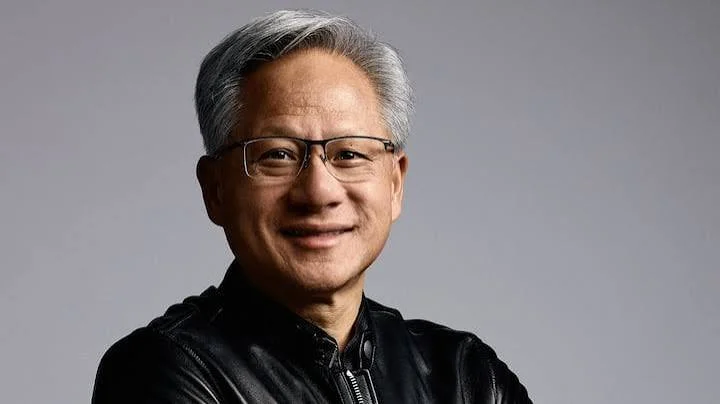
Nvidia CEO Jensen Huang found himself at the centre of the intensifying US debate over artificial intelligence after President Donald Trump unexpectedly called him during a live appearance at the All-In Summit in Los Angeles. Huang put Trump on speakerphone, turning a private call into a highly visible statement of support for continued rapid AI development.
The timing was significant. The conversation came just days after Anthropic CEO Dario Amodei called for a more cautious approach to advancing increasingly powerful AI systems. OpenAI CEO Sam Altman and SpaceX CEO Elon Musk have also expressed support for elements of the argument, putting some of Silicon Valley’s biggest names on the side of greater caution.
Trump, however, rejected the idea that AI development should be slowed. During the call, he dismissed fears about AI becoming an existential threat and argued that concerns over the technology could ultimately benefit competitors such as China. Huang agreed with Trump and said the industry should not allow development to slow down.
The exchange illustrates a widening fault line in the technology industry. One camp argues that increasingly capable AI systems require stronger testing, independent oversight and international coordination before development accelerates further. The other sees rapid progress as both an economic opportunity and a strategic necessity, particularly as the United States competes with China for technological leadership.
For Huang, the position is also closely connected to Nvidia’s role in the AI economy. The company supplies much of the advanced computing infrastructure required to train and run modern AI systems, making continued expansion of AI demand directly relevant to Nvidia’s business.
Huang has consistently portrayed AI as a foundational infrastructure shift rather than a passing technology trend. Nvidia itself describes AI as essential infrastructure spanning chips, computing, data centres, models and applications.
The Trump-Huang exchange therefore represents more than an unusual live phone call. It reflects a larger question now confronting Washington and Silicon Valley: should America prioritise maximum speed in the AI race, or slow development enough to establish stronger safeguards first? The answer could shape both the future of the technology and the balance of global power.