
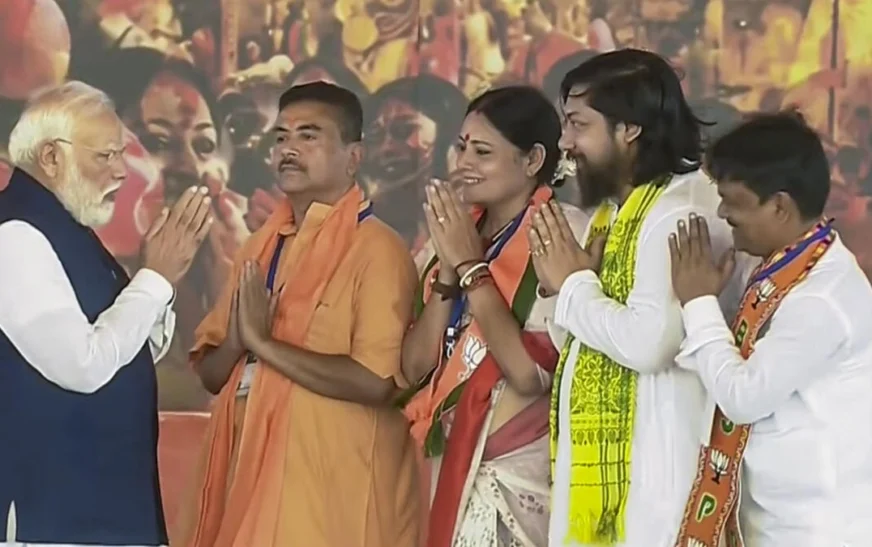
West Bengal is witnessing a historic political shift: the Bharatiya Janata Party (BJP) has formed its first government in the state, with Suvendu Adhikari as Chief Minister, and the makeup of the new cabinet reflects a mix of veteran hard‑liners, women leaders, and regional‑community faces meant to consolidate the party’s 207‑seat landslide. The list—from firebrands like Dilip Ghosh to actors‑turned‑leaders such as Agnimitra Paul and Nisith Pramanik—signals a balancing act between ideological muscle, electoral pragmatism, and social‑engineering outreach in a state the BJP has long struggled to truly own.
Key names in the new cabinet
At the centre of the lineup are leaders who have defined the party’s Bengal narrative over the past decade:
- Dilip Ghosh, former BJP West Bengal president and a combative campaigner in the plains and the tea‑belt, is expected to occupy one of the key ministerial berths, symbolizing the party’s attempt to institutionalize its aggressive‑polarizing style into routine governance.
- Agnimitra Paul, the Kolkata‑based actor and social‑worker who has built a strong urban‑middle‑class and women‑centred image, is being positioned as a feminine‑facing, “soft‑image” face of the government, giving the cabinet an aspirational, media‑savvy layer.
- Nisith Pramanik, the influential MP from the northern belt, is seen as the bridge to the Hindi‑speaking, border‑belt and OBC‑Muslim‑leaning constituencies, where BJP’s rise was unusually sharp in the 2026 mandate.
Party‑level discussions and news reports indicate that the cabinet will also include Dalit‑community leaders, Matua‑biased faces, and tribal‑belt representatives from the Jangalmahal and Santhal‑Pargana regions, aiming to cement the BJP’s foothold in segments once considered out of the party’s reach.
What the first‑BJP‑in‑Bengal cabinet is trying to achieve
The 2026 victory in Bengal is not just about numbers; it is about psychology. For the BJP, this government is meant to signal that the party can move from being a “anti‑TMC anger‑vehicle” to a full‑fledged ruling dispensation capable of delivering welfare, security, and infrastructure. The inclusion of Ghosh provides the ideological‑edge; Paul tones down the rhetoric and gives the cabinet a “modern‑Bengal” face; while Pramanik and other regional MPs anchor the outreach to the geographies that delivered the shock‑wave‑sweep.
The chief‑minister‑to‑be, Suvendu Adhikari, will likely combine the role of strategist and populist, using his deep‑roots in the Midnapore‑Paschim Medinipur belt to craft a model that can be replicated in the 2029 Lok Sabha‑and‑state‑matrix. The cabinet’s composition mirrors this: a mixture of aggressive‑speakers, soft‑narrators, and community‑specific ministers, all designed to keep the coalition‑RP‑stack stable while avoiding the “Hindi‑Hindutva‑bulldozer” caricature the party wants to shed in Bengal.
How this changes Bengal’s political chemistry
For decades, Bengal politics was framed as a Dravidian‑style Duopoly between Trinamool and the Left‑DMK‑like alternatives, with the BJP playing a minority‑opposition‑cum‑protest‑force role. The 2026 result shatters that template, and the first‑BJP‑led cabinet marks the moment the party becomes a full‑fledged power‑actor in the state’s executive‑architecture. The presence of Ghosh‑type hard‑liners, Paul‑style celebrity‑politicians, and Pramanik‑balanced regional leaders in the same room will test whether the BJP can govern the state’s complex identity‑mix without reigniting the old fault‑lines.
In symbol and substance, the new cabinet is a statement: Bengal is no longer a “BJP‑cannot‑win” bastion, but a BJP‑must‑retain-and‑deepen frontier. The road from Dilip Ghosh’s fiery rhetoric to Agnimitra Paul’s polished image will be the road the BJP hopes to travel—one that keeps the base angry enough to stick, but the centre comfortable enough to accept the new government as “normal Bengali‑rule” rather than foreign‑imposition.