

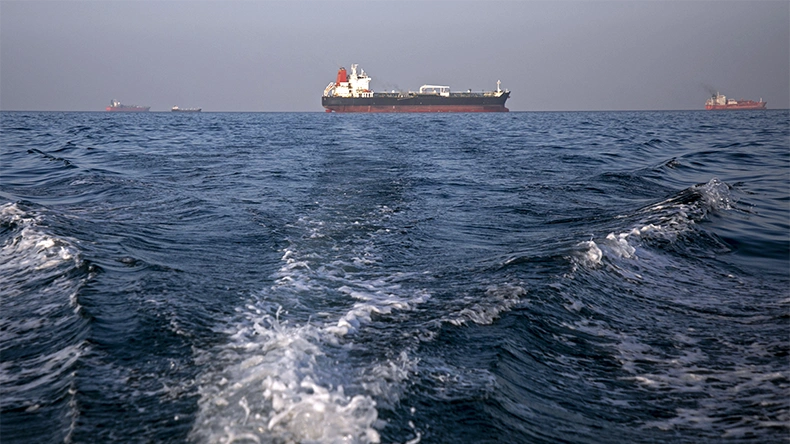
Three oil tankers carrying Saudi Arabian crude oil to India and China reversed course in the Red Sea after Yemen’s Iran-backed Houthi movement warned that vessels linked to Saudi ports could become targets. The development marks a significant escalation in the ongoing regional conflict and has heightened concerns over disruptions to global energy supplies.
According to shipping data and maritime sources, the tankers abandoned their planned route near the Bab el-Mandeb Strait and headed back toward the Suez Canal, avoiding waters close to Yemen following the Houthi warning. The militia recently announced a naval blockade targeting Saudi-linked shipping, opening what analysts describe as a new front in the wider US-Iran conflict.
The Bab el-Mandeb Strait is one of the world’s most critical maritime chokepoints, connecting the Red Sea to the Gulf of Aden. Around 12% of global seaborne trade and a significant share of international oil shipments pass through the waterway. Any disruption in this region can have immediate consequences for energy markets and international shipping.
Saudi Arabia has already been relying heavily on its East-West Pipeline, which transports crude from its eastern oil fields to the Red Sea port of Yanbu, allowing exports to bypass the Strait of Hormuz. However, the latest Houthi threats now place this alternative export route under pressure as well, leaving fewer secure options for shipping Saudi crude to Asian markets.
The latest disruption comes amid an expanding military confrontation between the United States and Iran. The Houthis, who have publicly aligned themselves with Tehran, declared the blockade after accusing Saudi Arabia of supporting actions against Yemen and Iran. The group warned shipping companies against loading or unloading cargo at Saudi Red Sea ports, increasing fears of further attacks on commercial vessels.
Energy markets reacted quickly to the developments. Brent crude prices climbed above $91 per barrel, while concerns grew over rising transportation costs, higher insurance premiums, and possible delays in oil deliveries to major importers such as India and China. Analysts noted that if disruptions continue at both the Strait of Hormuz and the Bab el-Mandeb Strait, global oil supplies could face severe logistical challenges.
Maritime security agencies have also issued fresh advisories, urging commercial vessels operating near Yemen and the Red Sea to exercise extreme caution. Shipping companies are reassessing routes as insurers classify more areas in the region as high-risk zones, potentially increasing operating costs for international trade.
The incident underscores how rapidly the Middle East conflict is expanding beyond military targets to affect global trade and energy infrastructure. With diplomatic efforts to de-escalate the crisis showing little progress, shipping companies, oil exporters, and major importing nations will be closely monitoring developments in the Red Sea. Any prolonged disruption could have far-reaching consequences for fuel prices, supply chains, and the broader global economy.