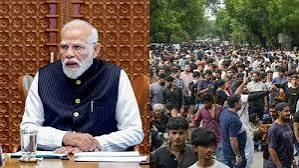

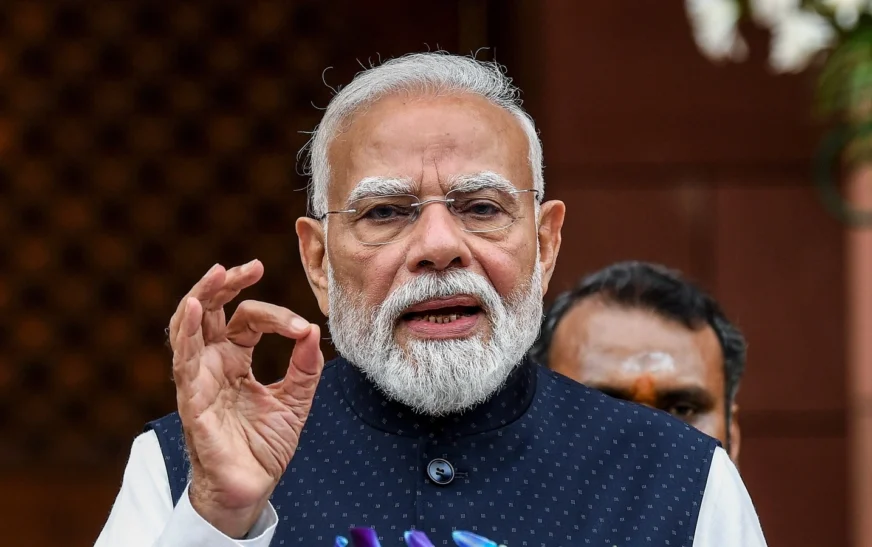
Prime Minister Narendra Modi on Thursday announced the establishment of fast-track courts to ensure speedy trials in examination paper leak cases, asserting that individuals who jeopardize the future of students will face stringent legal action. The announcement comes amid continuing nationwide protests over alleged examination irregularities and growing demands for greater accountability in the education system.
Addressing the issue, the Prime Minister said that the future of the country’s youth is of paramount importance and emphasized that crimes such as paper leaks cannot be tolerated. He stated that the government is committed to ensuring that those responsible are brought to justice quickly through dedicated judicial mechanisms.
Modi stressed that the proposed fast-track courts would help deliver swift justice and serve as a strong deterrent against individuals and organized networks involved in examination malpractice. He reiterated that protecting the integrity of competitive examinations remains a national priority and that deserving students should never suffer because of criminal activities.
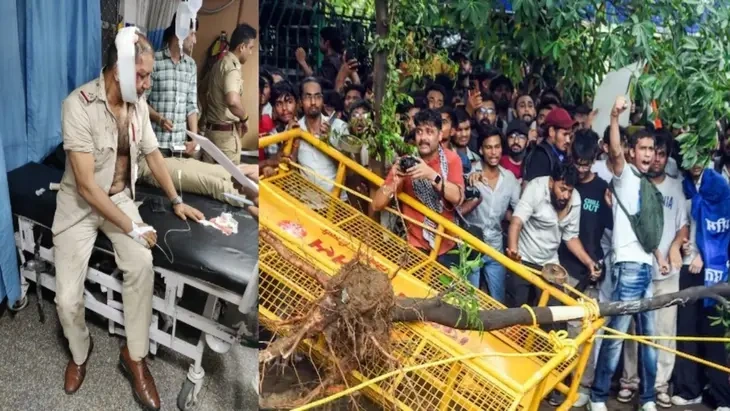
The announcement comes as protests linked to the alleged NEET paper leak and other examination-related issues continue in the national capital. Demonstrators have been demanding greater transparency in recruitment and entrance examinations, along with action against those allegedly involved in the leaks. Recent demonstrations in Delhi have also witnessed clashes between protesters and police, leading to heightened security around Parliament and central Delhi.
According to the Prime Minister, the government has already initiated multiple measures to strengthen examination security and investigate paper leak incidents. He said law enforcement agencies have been directed to pursue offenders aggressively and ensure that criminal networks behind such activities are dismantled.
The proposed fast-track courts are expected to prioritize cases involving examination fraud, enabling quicker prosecution and reducing delays in the judicial process. Officials believe the move will improve public confidence in the examination system while reinforcing accountability among institutions responsible for conducting competitive tests.
The announcement also sparked political reactions. Opposition leaders welcomed stronger action against paper leaks but argued that broader reforms are required to restore trust in the examination system. They called for greater transparency, improved security measures, and institutional accountability to prevent similar incidents in the future.
Education experts have similarly emphasized that legal action alone may not be sufficient. They have urged authorities to adopt advanced digital security measures, strengthen monitoring systems, and enhance coordination among examination agencies to safeguard the integrity of recruitment and entrance examinations.
With student concerns remaining at the forefront of national attention, the Centre’s decision to introduce fast-track courts signals a tougher stance against examination fraud. The government maintains that protecting the aspirations of millions of young Indians is a priority and that individuals involved in paper leak cases will face swift and stringent punishment under the law.