
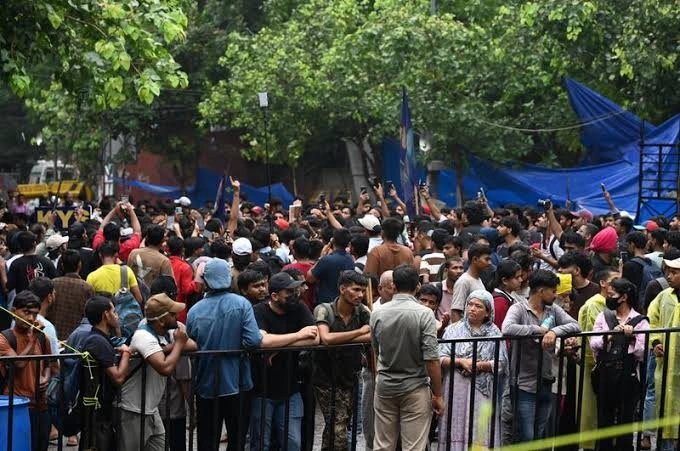
The youth-led Cockroach Janta Party (CJP) protest at Delhi’s Jantar Mantar continued to gain momentum on Thursday, with senior Opposition leaders, including Rahul Gandhi and Priyanka Gandhi Vadra, extending their support to demonstrators demanding accountability for repeated examination paper leaks and comprehensive reforms in India’s education system.
The protests, which began as a student-led movement against alleged irregularities in competitive examinations, have evolved into a nationwide campaign calling for systemic reforms. Demonstrators are demanding the resignation of Union Education Minister Dharmendra Pradhan, stricter action against those responsible for paper leaks, and greater transparency in the conduct of national examinations.
Rahul Gandhi Raises Three Key Demands
Addressing the issue, Rahul Gandhi reiterated three primary demands: the resignation of Education Minister Dharmendra Pradhan, an apology to students affected by repeated examination failures, and legal action against those responsible for the alleged assault on protesters during recent demonstrations in Delhi. Opposition MPs also staged protests outside Parliament, accusing the Centre of failing to protect students’ futures.
Congress president Mallikarjun Kharge also criticized the government, alleging that repeated examination controversies had eroded confidence in India’s education system and calling for immediate accountability. Opposition members submitted notices in Parliament seeking an urgent discussion on the issue and suspension of regular business to debate examination reforms.
Sonam Wangchuk Continues to Support Protesters
Environmental activist Sonam Wangchuk, whose hunger strike has become a focal point of the movement, maintained that he would end his fast only after receiving concrete assurances regarding the safety of student protesters and meaningful action on their demands. His participation has broadened public attention and increased support for the agitation across several states.
Meanwhile, CJP leaders declined an invitation to meet senior government representatives, insisting that any negotiations should be conducted publicly at the protest site rather than behind closed doors. Protest organizers stated that they would continue their agitation until tangible commitments are made by the government.
Heavy Security Across Central Delhi
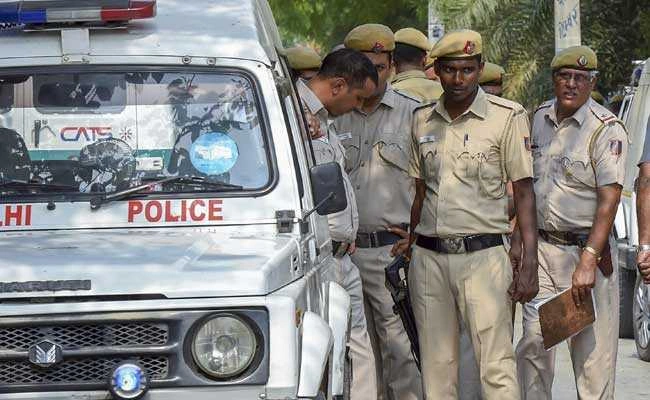
Authorities have significantly tightened security around Jantar Mantar, Parliament Street, and surrounding areas following clashes between protesters and police earlier this week. Delhi Police have deployed additional personnel, erected barricades, and intensified surveillance to prevent further violence.
As a precautionary measure, the Delhi Metro Rail Corporation (DMRC) temporarily closed multiple metro stations near the protest venue, affecting commuters across central Delhi. Protest organizers have urged participants to remain peaceful despite the heightened police presence.
Movement Gains National Attention
What began as a campaign against examination paper leaks has rapidly transformed into a broader youth movement highlighting concerns over employment opportunities, institutional accountability, and governance. Thousands of volunteers have supported the protest by providing food, water, and medical assistance, while demonstrations have spread to several cities across the country.
The growing scale of the protests has placed additional political pressure on the government. Prime Minister Narendra Modi has announced plans for fast-track courts to prosecute those responsible for examination-related corruption and has pledged reforms aimed at restoring confidence in the examination system. However, protest leaders continue to insist that structural reforms and ministerial accountability remain essential before the movement can be called off.
Government Under Pressure as Protests Continue
With Parliament in session and Opposition parties intensifying their campaign, the CJP movement has emerged as one of the most significant youth-led protests in recent years. Whether the Centre’s proposed reforms are enough to satisfy demonstrators remains uncertain, but the ongoing agitation has firmly placed education reforms and examination integrity at the centre of the national political debate.