
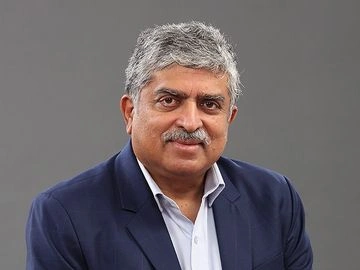
Prime Minister Narendra Modi has appointed Nandan Nilekani, the renowned technocrat, Infosys co-founder, and architect of the Aadhaar digital identity programme, to head a high-powered task force tasked with overhauling the National Testing Agency (NTA). The announcement comes in the wake of nationwide protests over alleged examination paper leaks and the government’s commitment to make India’s public examination system more secure, transparent, and technology-driven.
The multidisciplinary panel will recommend structural and technological reforms aimed at preventing examination malpractices and restoring public confidence in national entrance and recruitment examinations.
From Infosys Co-founder to Digital India Visionary
Born on June 2, 1955, in Bengaluru, Nandan Mohanrao Nilekani graduated in Electrical Engineering from IIT Bombay. In 1981, he co-founded Infosys along with N.R. Narayana Murthy and five other entrepreneurs, helping build one of India’s largest global IT companies.
Nilekani served in several leadership roles at Infosys, including Chief Executive Officer (CEO) and later returned as the company’s Non-Executive Chairman. Under his leadership, Infosys expanded globally and became one of India’s most valuable technology companies.
The Architect Behind Aadhaar
Perhaps Nilekani’s most transformative contribution came in 2009, when he became the founding Chairman of the Unique Identification Authority of India (UIDAI).
Leading the Aadhaar project, he oversaw the creation of the world’s largest biometric identity programme, which today serves more than a billion residents. Aadhaar has become the backbone of numerous government services, financial inclusion initiatives, and digital governance platforms across India.
His work also laid the foundation for several components of India’s Digital Public Infrastructure, including initiatives connected to India Stack, digital identity, authentication systems, and broader technology-enabled governance.
A Career Beyond Technology
Apart from his corporate achievements, Nilekani has played key roles in several national policy initiatives. He chaired the Reserve Bank of India’s High-Level Committee on Deepening Digital Payments, contributed to digital governance reforms, and has supported initiatives related to education, artificial intelligence, and public digital infrastructure.
Alongside his wife Rohini Nilekani, he co-founded the EkStep Foundation, a non-profit organisation focused on improving foundational learning through technology-driven educational solutions.
Tasked With Transforming the NTA
The newly constituted task force has been asked to recommend comprehensive reforms to the National Testing Agency, particularly in response to concerns over paper leaks and examination security.
According to the government, the committee will focus on:
- Strengthening digital security in examinations.
- Leveraging artificial intelligence and advanced technology to detect malpractice.
- Improving transparency and accountability in exam administration.
- Modernising examination infrastructure.
- Recommending long-term structural reforms for national entrance and recruitment examinations.
The panel includes experts from technology, education, security, and public administration, reflecting the government’s emphasis on multidisciplinary solutions.
Why Nilekani Was Chosen
Nilekani’s appointment is widely seen as a reflection of his proven ability to execute large-scale technology projects involving millions of users. His experience in building Aadhaar—a secure, nationwide digital identity system—is considered directly relevant to strengthening India’s examination ecosystem.
Officials believe his expertise in digital infrastructure, governance, cybersecurity, and systems design can help build an examination framework that is more resilient against organised fraud and paper leaks.
A New Chapter for India’s Examination System
The formation of the Nilekani-led task force marks one of the government’s most significant education reform initiatives in recent years. Alongside the proposed Public Examinations (Prevention of Unfair Means) Amendment Bill, 2026, the panel is expected to play a central role in redesigning how national examinations are conducted.
Students, educators, and policymakers will closely watch the recommendations of the committee, as its proposals are expected to shape the future of India’s examination system for years to come.