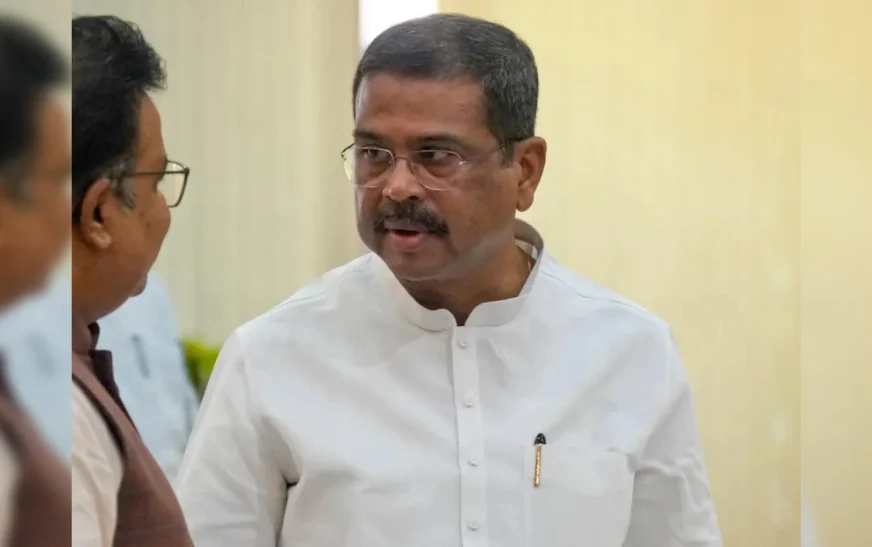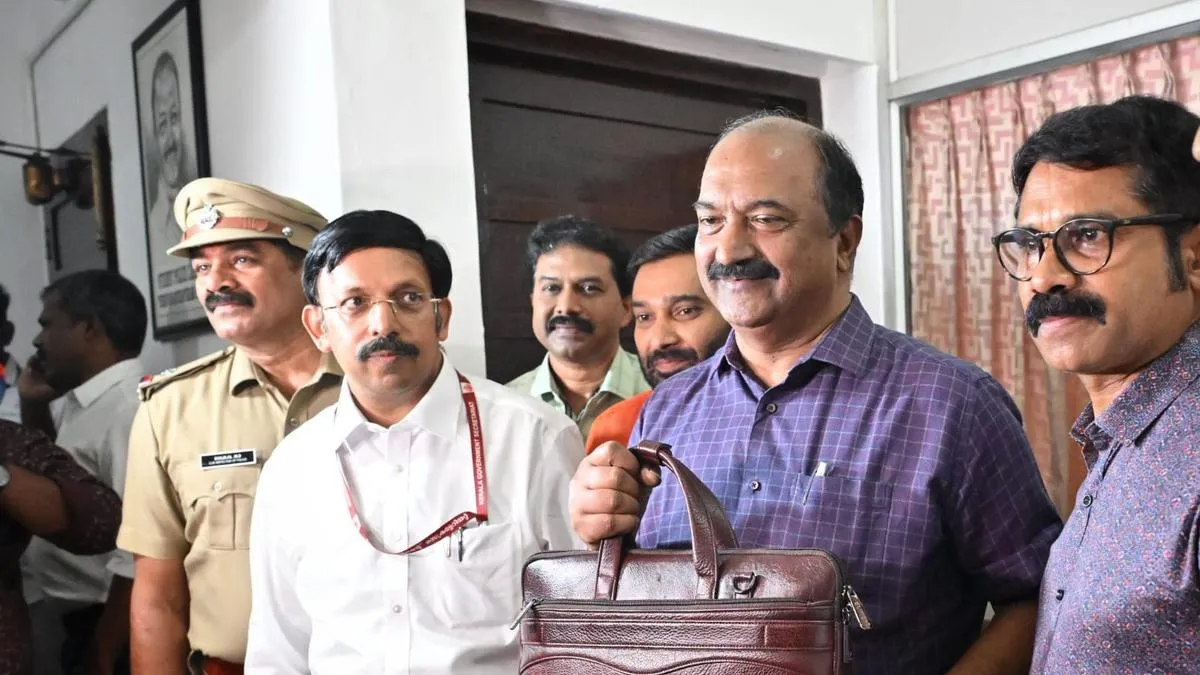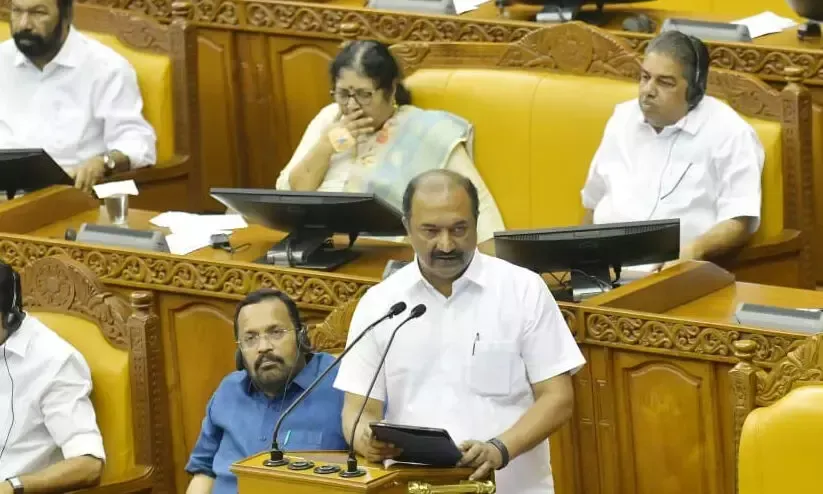

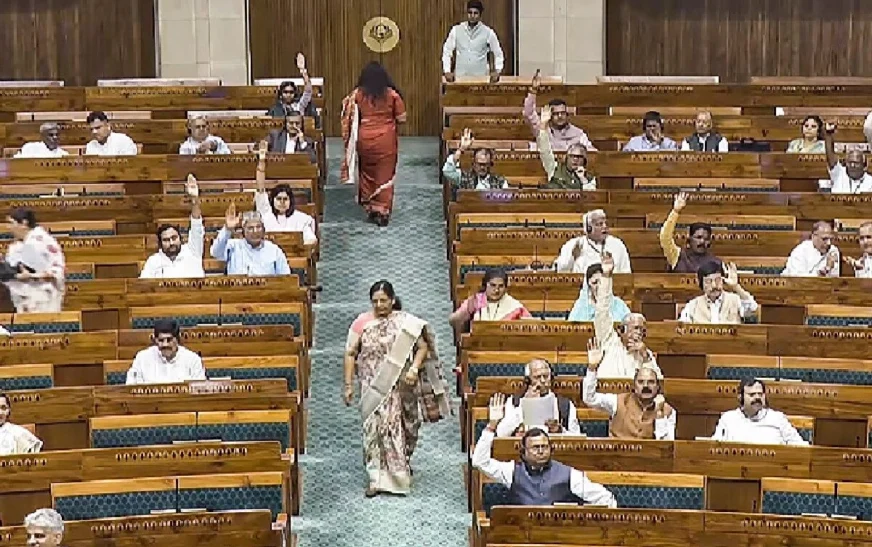
The Monsoon Session of Parliament entered a crucial phase on Monday, with the Lok Sabha taking up the Public Examinations (Prevention of Unfair Means) Amendment Bill, 2026. The proposed legislation has become the focal point of the session following nationwide protests over alleged examination irregularities and demands for stronger safeguards against paper leaks.
The Bill seeks to strengthen India’s legal framework against examination fraud by introducing stricter penalties, faster investigations, and time-bound trials for offences related to public examinations. It follows the government’s commitment to overhaul the examination system after weeks of student-led protests across the country.
Government Calls for Constructive Debate
Parliamentary Affairs Minister Kiren Rijiju appealed to all political parties to participate in the discussion and help build a stronger legal mechanism to tackle examination malpractices.
According to Rijiju, the government has already announced several reforms following the NEET controversy and is now placing a concrete legislative proposal before Parliament to ensure stricter accountability and restore public confidence in India’s examination system.
What the Amendment Bill Proposes
The proposed amendment introduces significant changes to the existing anti-paper leak law, including:
- Tougher punishments for individuals and organised groups involved in paper leaks.
- Faster investigation timelines for examination-related offences.
- Expedited court proceedings through dedicated judicial mechanisms.
- Greater accountability for third-party agencies and service providers associated with examination authorities.
- Stronger safeguards to protect the integrity of national recruitment and entrance examinations.
The government has maintained that these reforms are intended to prevent future examination fraud while ensuring timely justice for affected students.
Opposition Presses for Discussion on Student Protests
While the government focused on introducing the legislation, Opposition parties sought an urgent discussion on the alleged police action during the July 20 ‘Sansad Chalo’ student protest in Delhi.
Adjournment motions were moved in the Lok Sabha, while suspension of business notices were submitted in the Rajya Sabha, with Opposition leaders demanding accountability for the handling of demonstrations linked to the alleged NEET paper leak controversy.
Congress leader K.C. Venugopal argued that the government’s decision to introduce the amendment reflected the impact of sustained student protests and called for broader reforms beyond legislative changes.
Political Debate Intensifies
The debate inside Parliament mirrors the wider political discussion taking place across the country.
The ruling alliance has presented the Bill as evidence of its commitment to protecting students and ensuring transparency in public examinations. Opposition parties, meanwhile, have welcomed stronger anti-cheating laws but continue to question the government’s handling of the examination crisis and the response to student protests.
The issue has become one of the defining topics of the Monsoon Session, alongside other legislative business scheduled in both Houses.
Focus on Restoring Trust in Public Examinations
The introduction of the Public Examinations (Prevention of Unfair Means) Amendment Bill marks one of the government’s most significant legislative responses to recent examination controversies. If enacted, the law is expected to strengthen India’s efforts to combat organised paper leak networks, improve investigative processes, and enhance the credibility of public examinations.
As Parliament continues its deliberations, attention will remain on whether the Bill secures broad political support and whether the accompanying reforms succeed in restoring confidence among millions of students preparing for competitive examinations.