
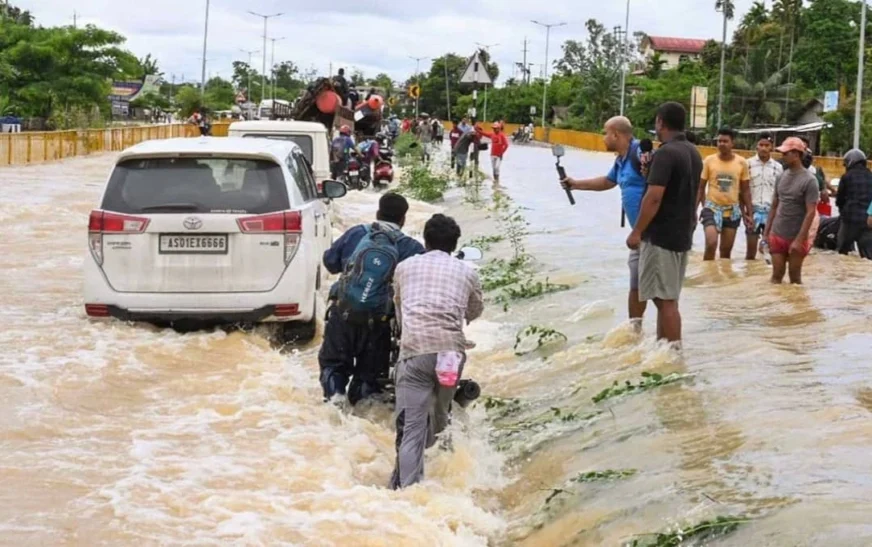
The flood situation in Assam continues to remain severe, with more than 4.45 lakh people affected across six districts after relentless monsoon rains triggered widespread flooding. According to the latest report from the Assam State Disaster Management Authority (ASDMA), 631 villages across 21 revenue circles are currently submerged, while the Dhansiri (South) River at Numaligarh is flowing above the danger mark.
The ongoing floods have disrupted normal life, damaged infrastructure, submerged agricultural land, and forced thousands of residents to seek shelter in relief camps as state authorities intensify rescue and rehabilitation efforts.
Six Districts Worst Hit
The floods have impacted six districts:
- Charaideo
- Sivasagar
- Golaghat
- Jorhat
- Nagaon
- Kamrup (Metropolitan)
Among them, Charaideo is the worst-affected district, with nearly 1.88 lakh people impacted, followed by Sivasagar, where around 1.44 lakh residents have been affected. Authorities have reported widespread inundation of villages, roads, and farmlands, disrupting transportation and daily life across the region.
Dhansiri River Above Danger Level
Hydrological data indicates that the Dhansiri (South) River at Numaligarh has crossed the danger level due to continuous rainfall in upstream catchment areas.
While no major river has crossed its Highest Flood Level (HFL) so far, officials continue to monitor river levels closely, warning that additional rainfall could worsen the flood situation in vulnerable districts.
Agriculture and Livestock Suffer Heavy Losses
The floods have dealt a significant blow to Assam’s agriculture sector.
According to official estimates:
- 37,139.52 hectares of cropland remain submerged.
- More than 2.56 lakh livestock have been affected.
- Over 26,000 animals have reportedly been washed away by floodwaters.
With agriculture serving as the primary source of income for many rural families, the damage is expected to have long-term economic consequences for affected communities.
Relief and Rescue Operations Intensified
The Assam government, in coordination with disaster response agencies, has expanded relief measures across flood-hit areas.
Authorities have established 184 relief camps and distribution centres, where nearly 28,700 displaced people are currently taking shelter. The camps also provide support for vulnerable groups, including pregnant and lactating women, children, and persons with disabilities.
Rescue operations are being carried out by:
- National Disaster Response Force (NDRF)
- State Disaster Response Force (SDRF)
- Local administration
More than 67 rescue boats have been deployed to evacuate stranded residents and deliver essential supplies to isolated villages.
Infrastructure and Daily Life Disrupted
Floodwaters have submerged roads, damaged public infrastructure, and cut off connectivity to several villages. Educational institutions, local businesses, and transportation services have also been affected, forcing authorities to focus on restoring essential services while ensuring public safety.
Officials continue to issue advisories urging residents living near rivers and low-lying areas to remain alert and move to safer locations if necessary.
Monsoon Challenge Continues
Assam experiences seasonal flooding every year due to heavy monsoon rainfall and the swelling of the Brahmaputra and its tributaries. However, the intensity of this year’s floods has once again highlighted the state’s vulnerability to recurring natural disasters.
With weather agencies forecasting continued rainfall in parts of Northeast India, authorities remain on high alert for further rises in river levels and possible fresh flooding. Relief operations are expected to continue until water levels recede and affected families can safely return to their homes