

Heavy monsoon rains have triggered severe flooding in parts of Pakistan’s Punjab province, with rising waters from the Chenab River inundating Muridke, a town known for housing the Markaz-e-Taiba complex, widely identified as the headquarters of the Pakistan-based militant group Lashkar-e-Taiba (LeT). The development has drawn attention because the same complex was targeted during India’s Operation Sindoor in May 2025.
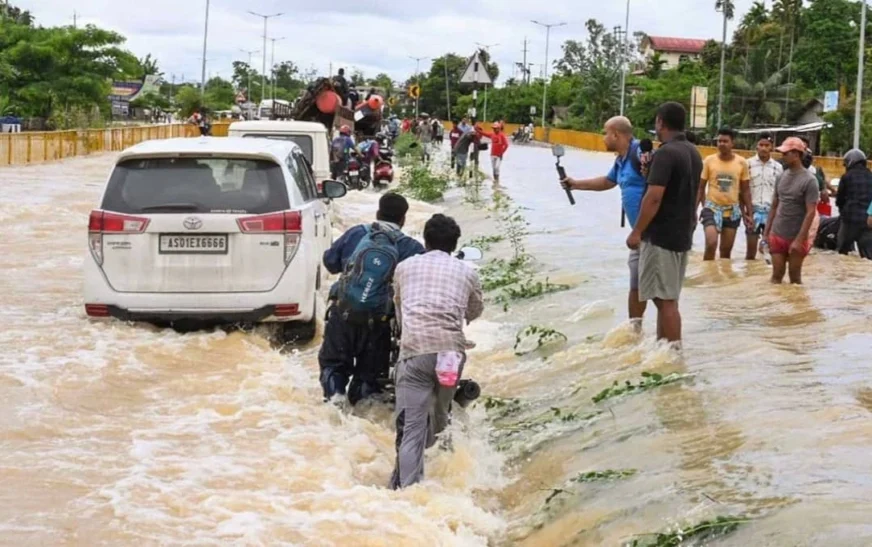
Videos circulating online and reviewed by Indian media reportedly show floodwaters submerging roads and buildings in and around Muridke. Some footage also appears to show rescue operations being carried out in affected neighbourhoods using boats as authorities respond to the flooding.
Heavy Rains Trigger Flooding
The flooding follows several days of intense monsoon rainfall across northern India and adjoining regions. The increased inflow into the Chenab River resulted in high water levels downstream after the river entered Pakistan, affecting several low-lying areas in Punjab.
According to India’s Ministry of External Affairs, the rise in river flows was a direct consequence of exceptionally heavy rainfall over Jammu and adjoining catchment areas between July 20 and July 23. The ministry rejected allegations that India had deliberately released water to cause flooding across the border.
Muridke in the Spotlight Again
Muridke came into international focus in May 2025 when India launched Operation Sindoor, a military operation targeting what it described as terrorist infrastructure in Pakistan following the Pahalgam terror attack. Indian authorities stated that the Markaz-e-Taiba complex in Muridke was among the facilities struck during the operation. Pakistan, however, disputed India’s characterization of some of the targeted sites.
The latest flooding has once again brought attention to the town, with images of submerged streets and surrounding areas widely shared on social media.
Flood Situation Across Pakistan’s Punjab
The Muridke flooding is part of a broader flood emergency affecting multiple districts in Pakistan’s Punjab province. Reports indicate that breaches in embankments and rapidly rising river levels have inundated villages, agricultural land, and residential areas, forcing rescue teams to evacuate residents from vulnerable locations.
Authorities have continued to monitor water levels as heavy rainfall persists across the region, with emergency services deployed to assist affected communities.
Weather, Not Political Action
The flooding has also prompted political exchanges between India and Pakistan regarding river flows. India has maintained that the increased discharge is entirely weather-driven and consistent with heavy monsoon conditions, emphasizing that natural rainfall across upstream catchment areas caused the surge in the Chenab River.
Hydrological experts note that rivers in the Indus basin routinely experience sharp increases during peak monsoon periods, especially following prolonged heavy rainfall.
Regional Impact of the Monsoon
The ongoing monsoon season has affected several parts of South Asia, with flooding reported in both India and Pakistan. Rising river levels, damaged infrastructure, and the displacement of residents have highlighted the challenges posed by extreme weather events across the region.
While Muridke has attracted significant attention because of its association with the Markaz-e-Taiba complex, the current flooding has impacted surrounding civilian areas as well, prompting rescue and relief operations.
Continuing Monitoring
Authorities in both countries continue to monitor river levels and rainfall forecasts as the monsoon progresses. With additional rainfall expected in parts of the Chenab basin, officials remain on alert for further flooding and have urged residents in vulnerable areas to follow evacuation advisories where necessary.