
A Forceful Voice for Women’s Political Empowerment
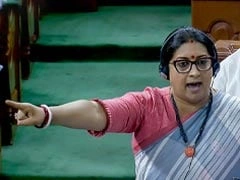
As Parliament debates the implementation of the Women’s Reservation Bill, Smriti Irani has emerged as one of the most vocal proponents of the reform.
Calling for the swift enactment of 33% reservation for women, she has framed the bill not just as legislation, but as a long-overdue correction in India’s democratic structure.
For Irani, the issue is not political — it is foundational.
A Direct Attack on Opposition Hesitation
In her recent remarks, Irani has sharply criticised opposition parties, particularly the Congress, questioning their commitment to women’s empowerment.
She pointed out that despite being led by prominent women leaders, opposition parties have historically failed to push the bill to completion when they had the opportunity.
Her argument is clear:
if there was intent, the bill would have already been reality.
From Debate to Delivery
Irani’s position aligns closely with the government’s broader narrative — that the time for discussion has passed, and the focus must now shift to implementation.
The Women’s Reservation Bill, which proposes 33% seats for women in Parliament and state assemblies, has already been passed as a constitutional amendment in 2023, but its rollout remains tied to delimitation and census processes.
For leaders like Irani, this delay risks diluting the urgency of the reform.
A Larger Political Narrative
Beyond policy, Irani’s stance reflects a wider political positioning —
projecting the BJP as the driver of women-led development, while placing pressure on opposition parties to either support or risk appearing obstructive.
At a time when Parliament reconvenes to discuss implementation, the debate is no longer about whether women deserve representation —
but about who ensures it happens.
Editorial Note: Between Promise and Politics
Smriti Irani’s sharp intervention brings clarity to a complex debate.
The Women’s Reservation Bill has broad support in principle.
Yet, its journey continues to be shaped by political positioning and procedural concerns.
The question now is not about intent —
but about execution.
Because history will not remember who debated the bill…
only who ensured that women finally took their rightful place in India’s legislative future.