
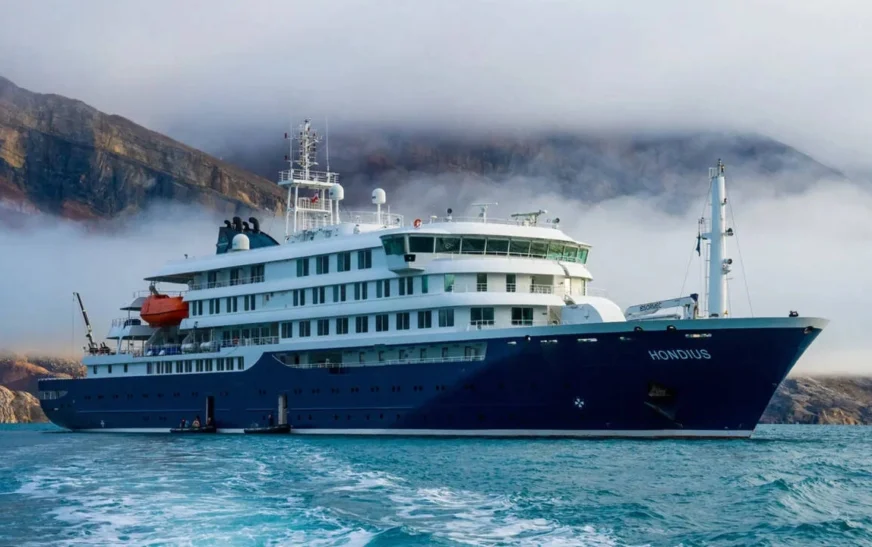
Two Indian crew members are still on board the MV Hondius, a luxury expedition cruise trapped in the North Atlantic, even as authorities battle a deadly hantavirus outbreak that has already killed three passengers and infected at least eight others. The 149‑person voyage—from Argentina to Spain—has turned into a floating medical emergency, with the ship’s path now converging on the Canary Islands for a strict health‑screening and decontamination process.
What happened on the Hondius
The Dutch‑operated MV Hondius left Ushuaia, Argentina, on April 1 carrying 88 passengers and 61 crew members from 23 nationalities. Argentine investigators believe the virus entered the ship through a birdwatching excursion, where a Dutch couple likely inhaled dried rodent‑droppings dust in the region around the tip of South America. The couple felt no immediate ill‑effects and boarded the cruise, unknowingly carrying the Andes‑strain of hantavirus with them.
Within days, the first passenger died on board on April 11; the cause could not be determined at sea. The body and the spouse were disembarked on St Helena, but the spouse later fell ill and died en route. On April 27, another passenger, a British tourist, became critically ill and was evacuated by air to the ICU in Johannesburg, South Africa, where doctors confirmed a hantavirus variant in the patient. On May 2, a third passenger, a German national, died on the ship, triggering a global alert and forcing the Hondius to halt at Cape Verde before continuing on to Tenerife.
The Indian crew on board
Of the 61 crew members, two are Indian nationals, working in support roles that keep the ship’s operations running while passengers explore ice‑floes and remote coasts. The expedition operator, Oceanwide Expeditions, has released a full nationality‑by‑nationality list but has not disclosed the health status, roles, or contact ‑exposure to the infected individuals of the two Indians.
India Today’s reporting notes that the presence of Indian seafarers reflects the broader pattern in polar‑expedition vessels: a highly international crew drawn from the Philippines (38 crew), Ukraine, the Netherlands and India, many of whom sign on for months at a time, living onboard in shared quarters with limited visibility in public‑health narratives. The Hondius incident could become a template for how India’s consular‑and‑health systems respond to medical‑emergency‑at‑sea cases involving Indian workers.
How dangerous is hantavirus?
Hantavirus is a rodent‑borne virus, typically spread when humans inhale tiny particles from dried mouse or rat droppings, urine, or nesting‑material. In the Americas, the Andes strain can jump from person to person through very close contact—shared bunkrooms, intimate care, or unprotected medical assistance—though it does not spread like airborne respiratory viruses in open‑spaces.
The Andes variant is brutal, starting with flu‑like symptoms—fever, headache, muscle ache, nausea—before rapidly progressing to lung‑failure and shock in the worst cases. The case‑fatality rate can approach 50 per cent, making early hospitalisation, oxygen support and ICU care vital to survival. There is no vaccine and no specific antiviral drug; treatment is essentially intensive‑supportive care, which is why the Hondius‑evacuated patient in Johannesburg remains in critical but stable condition.
What it means for India and the two seafarers
For India, the Hondius episode is less about a shipping‑based outbreak risk and more about under‑diagnosis and preparedness: hantavirus has been confirmed in India before, including a 2008 Tamil Nadu study of 28 cases among agricultural and warehouse workers and a 2021 quarry‑worker infection, but the disease is often mistaken for dengue or leptospirosis because the early symptoms overlap.
With the Hondius scheduled to dock in Tenerife around May 10–11, passengers will be assessed, contacts traced, and the ship thoroughly disinfected. The two Indian crew members’ fates—whether they remain on the vessel, are evacuated for testing, or disembark safely—will depend on that screening and the World Health Organisation’s guidance about the six‑week‑long incubation window, during which new cases could still surface even after the ship reaches land.
Until then, the world is watching the Hondius not just as a luxury‑expedition cruise, but as a real‑time global‑health‑alert platform, where the vulnerability of itinerant seafarers—including two Indians—is painfully exposed.