
Leaders Slam Opposition Over Reservation Row
The debate over the Women’s Reservation Bill has once again taken centre stage, with strong reactions emerging from key leaders across the political spectrum. Following the bill’s failure to secure the required majority in Parliament, several leaders have openly criticised the opposition’s stance, questioning its commitment to women’s representation.
According to reports, the bill — aimed at ensuring greater representation of women in Parliament and state assemblies — fell short of the necessary numbers, marking a significant political moment.
Sharp Reactions From Leaders
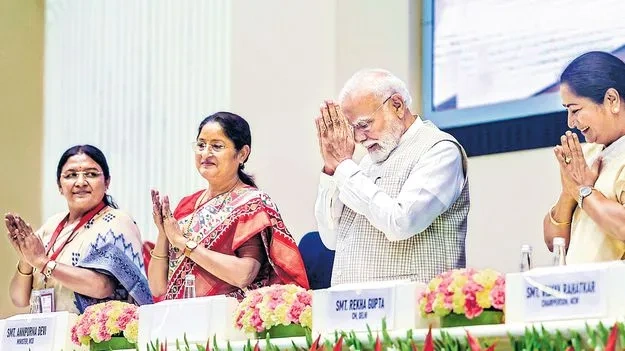
Delhi Chief Minister Rekha Gupta alleged that the opposition had “never truly supported” women’s participation in governance, stating that political resistance has historically slowed progress on gender representation.
Echoing similar sentiments, leaders like Smriti Irani, Kangana Ranaut, and Shaina NC criticised what they described as a pattern of resistance. They argued that the bill represented a long-overdue step toward empowering women across India, and that opposing it sends a conflicting message on commitment to gender equality.
The Women’s Reservation Bill, which has been debated for decades, seeks to allocate one-third of seats for women, addressing the current underrepresentation in legislative bodies.
Opposition’s Position
Opposition leaders, however, have defended their stance, stating that their objection lies not in the idea of reservation itself, but in its linkage to delimitation and electoral restructuring. They have argued that the bill, in its current form, raises constitutional and political concerns.
This divergence highlights a broader political divide — one between intent and implementation, where both sides claim to support women’s empowerment, but disagree on the path forward.
A Larger Political Signal
The developments reflect how issues of gender representation, governance, and electoral strategy are deeply intertwined in India’s political landscape.
As the debate continues, the core question remains —
whether political consensus can be achieved on a reform that has long been seen as essential for inclusive democracy.
For now, the bill’s fate remains uncertain, but the conversation around women’s role in Indian politics has once again moved to the forefront — sharper, louder, and more contested than ever.