
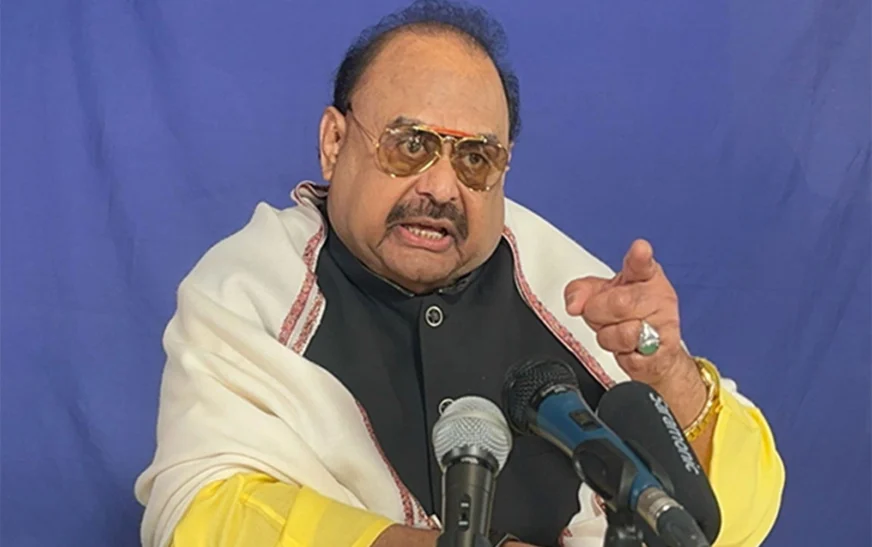
Founder of the Muttahida Qaumi Movement (MQM), Altaf Hussain, has strongly criticised the reported violence against protesters in Pakistan-administered Kashmir (PoJK), describing the bloodshed as “deeply distressing.” Speaking during an emergency online address, Hussain alleged that Pakistani police and security forces opened fire on unarmed demonstrators who had been protesting peacefully for their rights in several towns across the region.
His remarks come amid escalating unrest in Pakistan-administered Kashmir, where demonstrations and clashes have intensified following protests organised by the Joint Awami Action Committee (JAAC). Reports indicate that multiple people have been killed or injured during the violence, although casualty figures remain disputed.
Altaf Hussain Calls the Situation ‘Deeply Distressing’
During his address, Hussain said the reported deaths and injuries of Kashmiri civilians were alarming and urged Pakistani authorities to stop using force against peaceful protesters.
He alleged that instead of engaging with the demonstrators’ demands, security personnel resorted to firing on crowds in areas including Rawalakot and Mirpur, resulting in casualties. According to Hussain, the continued use of force against civilians was unacceptable and had worsened tensions in the region.
Allegations Over Crackdown on Protesters
Hussain further claimed that several protesters were injured after security forces allegedly used live ammunition during demonstrations. He also alleged that some bodies and injured individuals were removed from protest sites and that access to hospitals was disrupted, though these claims have not been independently verified.
Pakistani authorities have defended their actions, alleging that armed elements and India-backed militants infiltrated the protests. India has rejected similar allegations in the past.
Growing Unrest in Pakistan-Administered Kashmir
The protests are part of a broader movement demanding improved governance, economic relief, and greater political rights in Pakistan-administered Kashmir. Demonstrations have intensified since the Joint Awami Action Committee (JAAC) was banned in June, leading to widespread disruptions in transportation, banking services, and internet connectivity across parts of the region.
Security concerns also affected the region’s election process, with polling conducted in multiple phases rather than on a single day.
Questions Raised Over Government Response
In his remarks, Hussain questioned whether violence against civilians could help preserve national unity. He argued that suppressing peaceful protests through force would only deepen public resentment and further destabilise the region. He also alleged that authorities had attempted to restrict media coverage of the unrest, though these claims have not been independently confirmed.
The comments have added to growing international attention on the situation in Pakistan-administered Kashmir as reports of violence continue to emerge.
Casualty Figures Remain Disputed
Independent verification of the number of deaths and injuries has been difficult because of communication disruptions and restricted access to some affected areas. Protest organisers have claimed that dozens of people were killed, while Pakistani officials have acknowledged fatalities but reported lower numbers. Reuters noted that it could not independently verify the higher casualty figures cited by protest leaders.
International Focus on Developments
The ongoing unrest has drawn attention from political leaders, rights groups, and international observers monitoring developments in Pakistan-administered Kashmir. As protests continue and tensions remain high, there are increasing calls for restraint, accountability, and a peaceful resolution to the crisis.
With the security situation still evolving, authorities continue to monitor demonstrations while political leaders and civil society organisations urge dialogue to prevent further violence.