
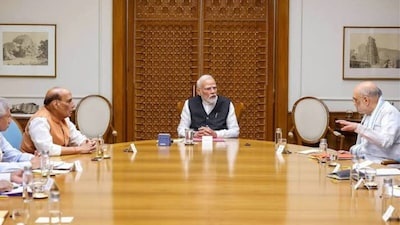
Prime Minister Narendra Modi chaired a high-level meeting of the Cabinet Committee on Security (CCS) to assess the rapidly evolving global security situation and its potential impact on India’s economy, energy security, and supply chains. The meeting focused on ensuring uninterrupted imports of essential commodities amid conflicts affecting key international maritime routes, including the Strait of Hormuz, the Red Sea, the Black Sea, and the Gulf of Aden.
The review comes as geopolitical tensions continue to disrupt global trade, prompting India to strengthen contingency plans for critical imports such as crude oil, natural gas, and fertilizers.
High-Level Meeting Reviews Strategic Challenges
The extended CCS meeting was attended by senior members of the Union Cabinet, including Defence Minister Rajnath Singh, Home Minister Amit Shah, External Affairs Minister S. Jaishankar, Finance Minister Nirmala Sitharaman, and several ministers responsible for commerce, shipping, petroleum, and fertilizers. Cabinet Secretary T. V. Somanathan briefed the committee on the current geopolitical situation and the government’s preparedness to manage any disruptions.
Officials reviewed the security implications of ongoing international conflicts and evaluated measures taken by various ministries to ensure that India’s supply chains remain resilient despite growing uncertainty.
Focus on Energy Security
One of the key priorities discussed during the meeting was India’s energy security.
Government officials informed the CCS that the country has diversified its sources of Liquefied Petroleum Gas (LPG) and maintains adequate stocks of petroleum products. Central Public Sector Enterprise (CPSE) refineries are reportedly operating at utilization levels exceeding 100 percent, helping ensure uninterrupted production of petrol, diesel, and other fuels.
The meeting also reviewed initiatives to expand:
- Liquefied Natural Gas (LNG) infrastructure.
- Piped Natural Gas (PNG) connections.
- City Gas Distribution networks.
- National Gas Grid connectivity.
- Pipeline infrastructure to strengthen long-term energy resilience.
Ensuring Fertilizer Availability
With the upcoming Rabi cropping season approaching, the CCS assessed India’s fertilizer requirements and examined alternative import sources.
Prime Minister Modi directed officials to ensure that farmers receive an uninterrupted supply of fertilizers despite any disruptions in international trade. The government also reviewed procurement strategies to reduce dependence on vulnerable shipping routes and maintain stable supplies across the country.
Protection of Indian Seafarers
Another major topic of discussion was the safety of Indian seafarers working on domestic and foreign-flagged vessels operating in conflict-prone waters.
Prime Minister Modi instructed concerned ministries to establish a dedicated mechanism that would provide:
- Timely information to seafarers.
- Emergency assistance during crises.
- Counseling services.
- Support for the families of affected personnel.
The move reflects growing concerns over attacks on commercial shipping in strategically important maritime corridors.
Global Conflicts Impacting Trade Routes
The CCS reviewed the impact of conflicts affecting several of the world’s busiest maritime routes.
Particular attention was given to:
- The Strait of Hormuz.
- The Red Sea.
- The Gulf of Aden.
- The Black Sea.
These waterways handle a significant share of global energy and cargo shipments. Continued instability, including attacks on commercial vessels, has increased transportation costs and complicated international logistics. India, which relies heavily on imported energy, is closely monitoring developments to minimize disruptions.
Government Emphasizes Supply Chain Resilience
The Prime Minister stressed the importance of strengthening India’s resilience against external shocks.
Officials discussed strategies such as diversifying import sources, improving logistics infrastructure, maintaining adequate strategic reserves, and enhancing coordination among ministries responsible for commerce, shipping, energy, and external affairs. These measures are intended to protect the country’s economic interests even if geopolitical tensions persist.
Fourth Special CCS Meeting on West Asia
According to the Prime Minister’s Office, this was the fourth special CCS meeting convened to review the implications of the ongoing West Asia crisis.
The repeated high-level reviews underscore the government’s focus on maintaining national security, protecting Indian citizens abroad, ensuring uninterrupted energy supplies, and safeguarding economic stability in an increasingly uncertain global environment.
Preparing India for Global Uncertainty
The latest CCS meeting highlights India’s proactive approach to managing geopolitical risks that extend beyond national borders.
By strengthening energy security, securing fertilizer supplies, protecting Indian seafarers, and building more resilient supply chains, the government aims to reduce the impact of international conflicts on the country’s economy. As global uncertainties continue to evolve, regular reviews by the Cabinet Committee on Security are expected to remain an important part of India’s strategic planning and preparedness.