
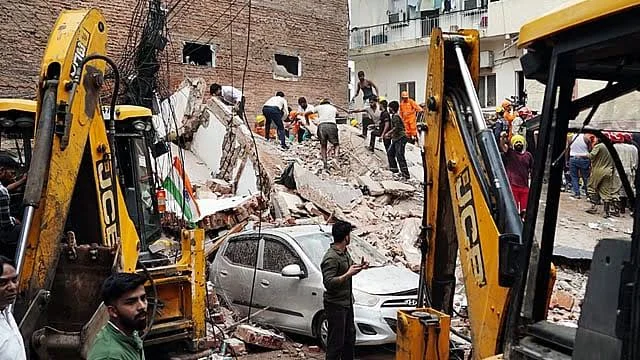
The Delhi Satya Niketan building collapse has exposed another serious vulnerability in the capital’s rapidly expanding student-housing ecosystem. A multi-storey building being used as a boys’ paying guest accommodation collapsed on Sunday, killing six people and leaving several others injured. Rescue teams have pulled 13 people from the debris, while search operations continue.
The building, reportedly nearly 50 years old, was undergoing work in its basement when it collapsed. The exact cause has not yet been officially established, making it important not to prematurely attribute the disaster to a single factor. However, reports of construction or repair activity immediately before the collapse raise serious questions about structural assessment and safety supervision.
Student Housing Is the Bigger Concern
Satya Niketan is a major student accommodation hub because of its proximity to Delhi University’s South Campus. The collapse therefore goes beyond one building. It raises questions about how privately operated hostels and PG accommodations are inspected, certified and monitored, particularly in densely populated neighbourhoods where old buildings are frequently modified to accommodate more residents.
The emergency response also demonstrated the importance of community participation. Students and local residents reportedly began removing debris and helping victims even before formal rescue operations were fully established. NDRF, Delhi Fire Services, police and other agencies later expanded the operation.
Delhi Chief Minister Rekha Gupta has ordered a magisterial inquiry, while an FIR has been registered against the building owner.
The real test now is whether the tragedy leads to a citywide safety audit of student accommodation—or remains another disaster followed by temporary scrutiny. Delhi needs preventive enforcement, not just stronger rescue operations after buildings collapse.