
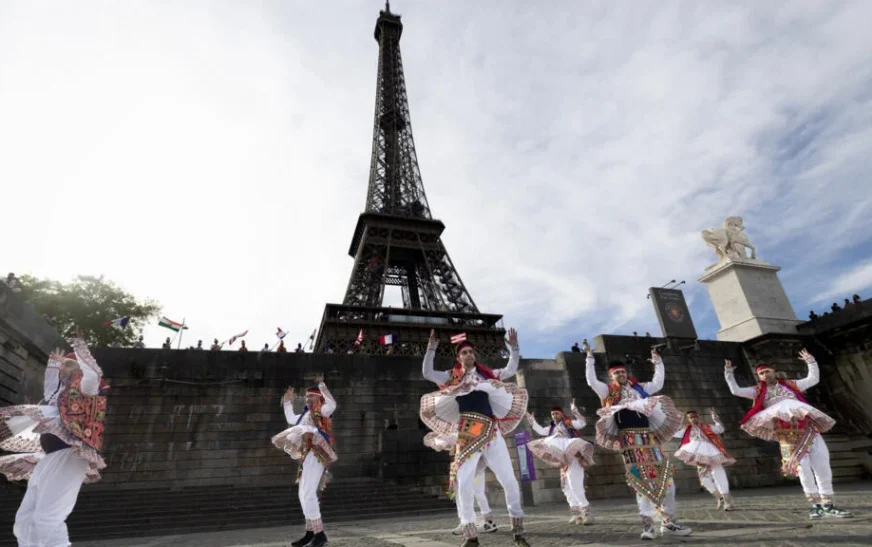
The Eiffel Tower was closed to visitors on Monday after staff protested over the alleged sidelining of female employees during a private visit by a Hindu religious delegation linked to BAPS. The incident has triggered a political and workplace debate in France over gender equality, religious accommodation and the limits of private visitor requests.
Around 100 people associated with the Bochasanwasi Akshar Purushottam Swaminarayan Sanstha visited the Paris landmark on Saturday during events surrounding the inauguration of a major BAPS Hindu temple near Paris. According to union representatives, female employees were asked to leave certain workstations and areas while the delegation passed, with male employees taking their positions.
The controversy became particularly significant because the Eiffel Tower’s operating company, SETE, acknowledged that the delegation had requested arrangements to limit interactions with women and said those conditions should not have been accepted. Staff subsequently protested, leading to the temporary closure of the landmark.
France Faces a Difficult Balance
BAPS has apologised for any pain or inconvenience caused, saying the visit was coordinated with Eiffel Tower authorities to minimise disruption and that, to its knowledge, nobody was denied access to the monument.
Paris Mayor Emmanuel Grégoire has ordered an investigation, while senior French political figures have strongly defended gender equality. The dispute therefore extends beyond one private visit: it raises questions about how public institutions should accommodate religious or cultural preferences without compromising workplace rights.
The immediate responsibility now lies with SETE and French authorities to establish exactly what instructions were issued and who authorised them. The outcome will matter because religious accommodation cannot become a mechanism for discrimination, while cultural differences also need to be handled through dialogue rather than political confrontation.
For the Eiffel Tower, a symbol of France itself, the episode has become an unexpected test of how the country balances hospitality, pluralism and its commitment to equality.