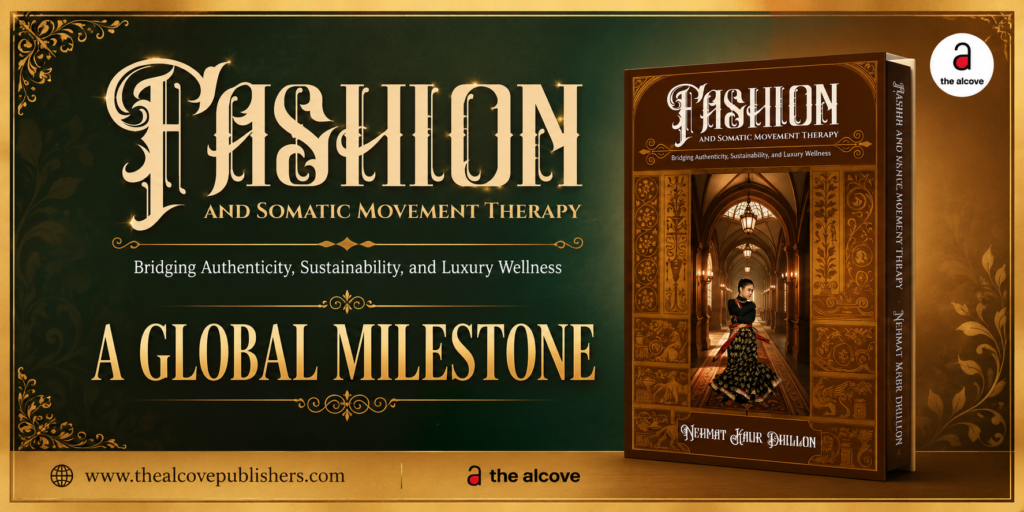
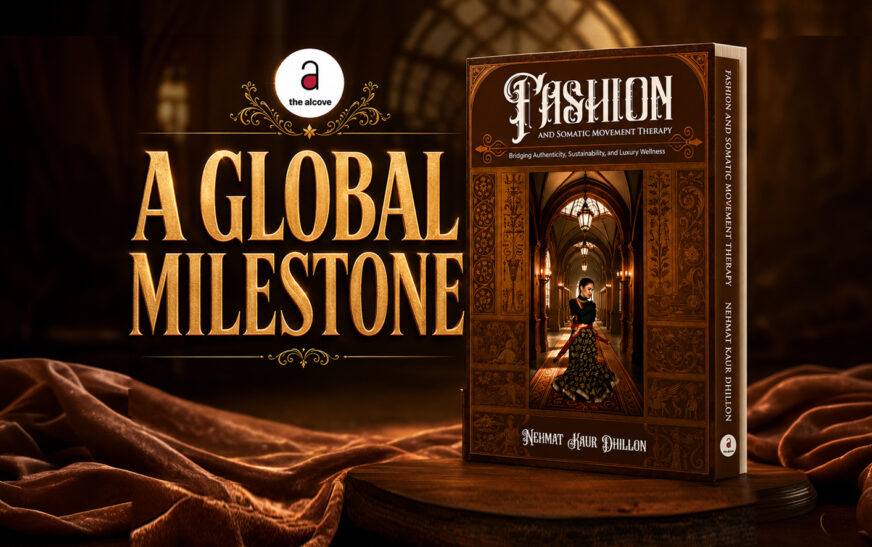
Nehmat Kaur Dhillon’s pioneering work on Somatic Fashion joins the research collection of The Metropolitan Museum of Art’s Costume Institute, marking an important moment for Indian scholarship and independent publishing.
In the world of fashion, few institutions command the respect and influence of The Costume Institute at The Metropolitan Museum of Art, New York. Every year, its exhibitions shape global conversations around dress, culture, identity and aesthetics, while the Met Gala transforms those conversations into one of the world’s most closely watched cultural events.
Behind these celebrated exhibitions stands the Irene Lewisohn Costume Reference Library—the primary research library supporting The Costume Institute’s curatorial team. Housing more than 30,000 books and periodicals dedicated to the history of fashion and dress, it is where the early stages of exhibition research begin and where scholars, designers and historians from around the world come to study.
It is into this distinguished collection that an Indian scholarly work has now been welcomed.

Fashion and Somatic Movement Therapy: Bridging Authenticity, Sustainability and Luxury Wellness, authored by Nehmat Kaur Dhillon and published by The Alcove Publishers, has been formally received and acknowledged by the Associate Museum Librarian of the Irene Lewisohn Costume Reference Library.
The inclusion represents a noteworthy achievement—not only for the author, but also for contemporary Indian scholarship that is increasingly contributing original ideas to international academic discourse.
Rethinking the Meaning of Fashion
Fashion is often understood through design, craftsmanship, commerce or cultural identity. Nehmat Kaur Dhillon’s research offers another perspective altogether—one that begins with the human body.
Her work examines fashion as an embodied experience, exploring how clothing influences emotional wellbeing, sensory awareness and human consciousness.
Based on fifteen years of practice-based research conducted between 2011 and 2026, the book is widely recognised as the first scholarly work to establish a comprehensive connection between Somatic Movement Therapy and luxury fashion design.
Rather than asking how clothing looks, the book asks a deeper question:
Can fashion become a medium for healing, awareness and sustainable living?
It is this inquiry that distinguishes the work from conventional fashion scholarship.
Introducing New Frameworks
The book contributes several original concepts that expand the language of fashion research.
Among them are Somatic Couture, which explores how clothing interacts with the nervous system and sensory perception; Eco-Somatic Design, which examines the relationship between the body, nature and sustainable design; Embodied Wisdom, highlighting knowledge carried within the body; Embodied Advocacy, positioning fashion as an agent of ecological and social responsibility; and Somatic Journaling, an original qualitative research methodology developed through the author’s long-term experiential practice.
Together, these ideas encourage readers to view fashion not merely as an industry or aesthetic discipline, but as an experience shaped by movement, memory, emotion and the relationship between people and the environments they inhabit.
A Global Conversation Already Underway
The broader fashion industry appears to be moving in a similar direction.
Independent trend forecasting agency Nextatlas identified Somatic Intelligence among fashion’s defining trends for 2026, reflecting a growing international interest in body-centred design and sensory experience.
Many observers also noted that themes emerging from the 2026 Met Gala increasingly treated the body as both subject and medium of artistic expression.
While these developments stem from multiple influences, Nehmat Kaur Dhillon’s work demonstrates that the intellectual foundations for such conversations have been developing through sustained scholarly inquiry for more than a decade.
Research Built on Experience
Unlike many academic studies rooted primarily in theoretical analysis, this book emerges from lived practice.
Drawing upon experiential journals, somatic movement exploration, reflective inquiry and interdisciplinary research, the work builds on the contributions of internationally respected pioneers including Anna Halprin, Bonnie Bainbridge Cohen, Mary Starks Whitehouse, Marion Woodman, Gabor Maté, Peter Levine and Carl Jung.
From these foundations, it moves into new territory by integrating movement therapy, psychology, sustainability and luxury fashion into a unified scholarly framework.
Beyond Fashion
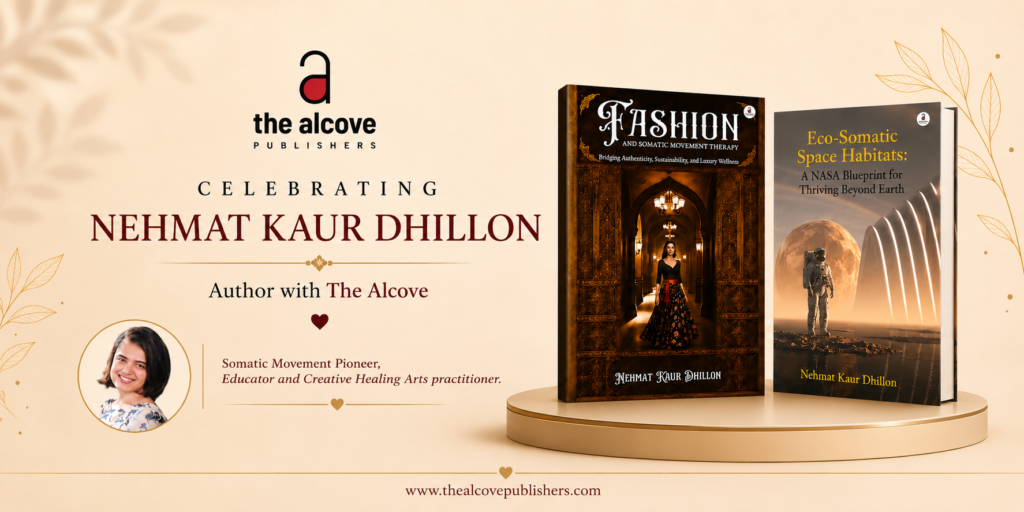
Nehmat Kaur Dhillon has established herself as an independent researcher working across somatic movement, education, sustainability and design.
She holds an MA in Dance and Somatic Wellbeing: Connections to the Living Body from the University of Central Lancashire and a BA (Hons) in Dance Movement Studies and Healing Arts from the University of Derby. A UNESCO CID Gold Medalist, she has taught at universities in the United Kingdom, Finland and the Czech Republic.
Her scholarship extends beyond fashion.
Her earlier work, Eco-Somatic Space Habitats: A NASA Blueprint for Thriving Beyond Earth, explored how somatic principles could influence the design of future human habitats, including those beyond Earth. The book reached No. 2 in Amazon’s Science and Innovation category, further establishing her reputation for bringing together disciplines rarely examined in combination.
Across her published works, a common theme emerges: the belief that human wellbeing, design and the environment are deeply interconnected.
A Milestone for Indian Publishing
The acceptance of Fashion and Somatic Movement Therapy into one of the world’s leading fashion research libraries is also a significant moment for Indian publishing.
Published by The Alcove Publishers, the book demonstrates that original scholarship produced through an independent Indian publishing house can find a place within internationally respected academic institutions.
At a time when interdisciplinary research is increasingly shaping global conversations, this achievement highlights the growing visibility of Indian authors contributing original thought to specialised fields.
A Place in the Global Record
Recognition in academia is rarely measured by popularity alone. It is often defined by the institutions that choose to preserve a work for future generations of scholars.
With its inclusion in the Irene Lewisohn Costume Reference Library, Fashion and Somatic Movement Therapy becomes part of an international research collection consulted by curators, designers, historians and researchers exploring the evolving story of fashion.
For Indian scholarship, the achievement is a quiet but significant reminder that ideas born from sustained research, intellectual independence and original thinking can find a lasting place within the world’s foremost centres of knowledge.