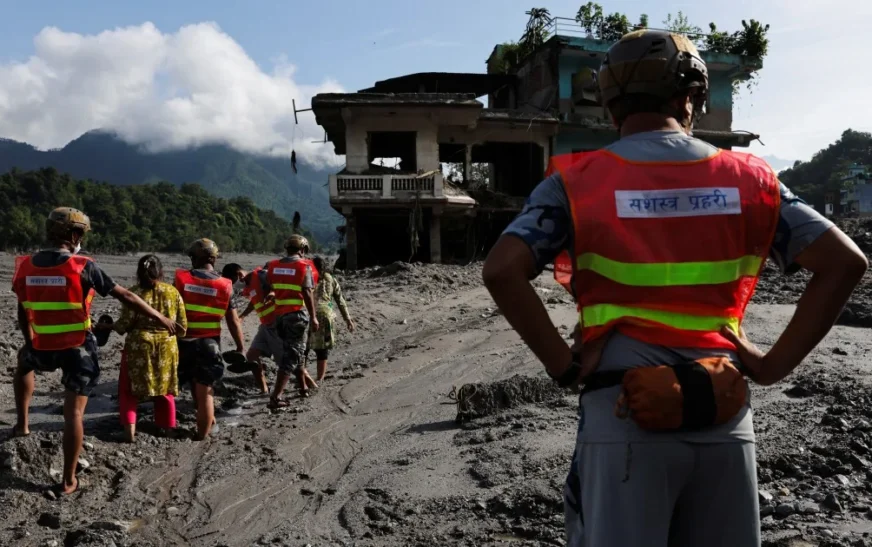

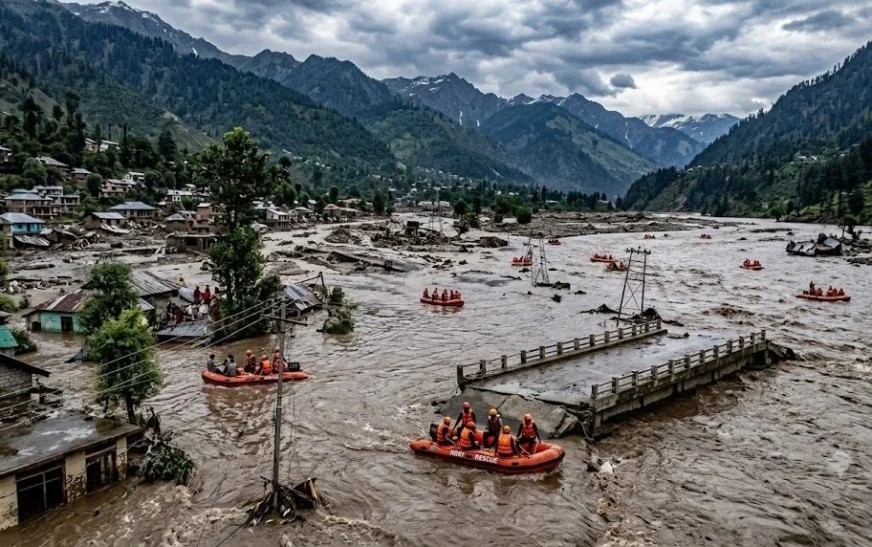
Rescue operations have resumed along the Nepal-China border after a brief suspension caused by fears of further flooding, as the death toll from the catastrophic Himalayan disaster has risen beyond 600. The disaster has left thousands missing and caused widespread destruction across Nepal and Tibet.
The floods were triggered by a glacier collapse, which sent a powerful torrent of rock, ice, mud and debris through Himalayan river systems. The sudden surge overwhelmed settlements and infrastructure, leaving rescuers facing extremely difficult conditions. Reports indicate that more than 90,000 people have been affected by the disaster.
The resumption of rescue operations is an important development, but authorities remain cautious because of the threat posed by a newly formed glacial lake. Rising water levels had temporarily forced rescuers to slow or suspend operations, highlighting the possibility of another wave of flooding in already devastated areas.
Why the Disaster Is So Serious
The scale of the destruction goes beyond the immediate death toll. Roads, bridges, settlements and major infrastructure have been damaged, while rescue teams are struggling to reach some of the worst-hit locations. In Nepal, more than 100 people are believed to remain trapped at the Upper Trishuli-1 Hydropower Project, while rescue teams are using drones, boats and other equipment to search difficult terrain.
China has also intensified its rescue response in Tibet. Chinese rescue teams have reached severely affected areas near the Gyirong border crossing, where the destruction has been described as extensive. The border region is particularly important because it serves as a major connection between Nepal and China.
The disaster also has serious economic consequences for Nepal. The country’s finance minister has estimated that rebuilding could cost between $4 billion and $5 billion, potentially equivalent to nearly a tenth of Nepal’s economy. Damage to hydropower facilities, transport infrastructure and communities could have long-term consequences for the country’s economic recovery.
From an analytical perspective, the disaster demonstrates the growing risks facing communities in the Himalayan region. Rapid changes in mountain environments, unstable glaciers and glacial lakes can create hazards that develop with very little warning. This makes early-warning systems, satellite monitoring and cross-border disaster coordination increasingly important.
The humanitarian situation is equally concerning. Thousands of people remain unaccounted for, while survivors require food, shelter, medical assistance and clean water. Children are among those particularly vulnerable, with UNICEF reporting that thousands require urgent assistance and numerous schools have been destroyed or damaged.
The immediate priority is therefore to locate survivors and missing people while preventing a secondary disaster. But once the emergency phase ends, Nepal and China will face the much larger challenge of rebuilding communities and infrastructure.
The tragedy ultimately highlights how climate and geological risks in the Himalayas can quickly become a cross-border humanitarian crisis. Effective cooperation between Nepal, China and international relief organisations will be crucial in the weeks and months ahead.