PM Modi Arrives in Bishkek for 26th SCO Summit: India’s Strategic Priorities and Global Significance

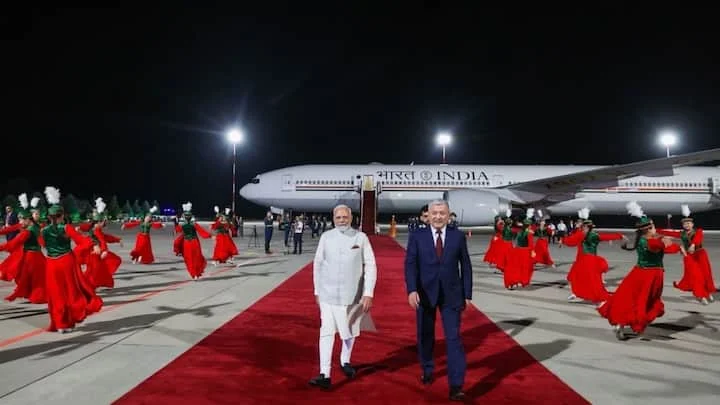
Prime Minister Narendra Modi arrived at the Yrys Ordo Congress Hall in Bishkek, Kyrgyzstan, on Tuesday to participate in the 26th Shanghai Cooperation Organisation (SCO) Summit. The gathering brings together leaders from major Eurasian countries, including Chinese President Xi Jinping and Russian President Vladimir Putin, making it an important diplomatic event for India.
The summit comes at a time of significant geopolitical uncertainty, with conflicts in West Asia and Ukraine continuing to affect international security, energy markets and trade. For India, the SCO provides an important platform to engage simultaneously with Russia, China, Iran, Central Asian countries and other regional partners.
Why PM Modi’s SCO Visit Matters
India’s participation in the SCO reflects its broader policy of strategic autonomy. New Delhi maintains relationships with countries that have very different political and strategic interests, while avoiding dependence on any single geopolitical bloc.
The presence of Modi, Xi and Putin at the same summit is particularly significant. Their interactions attract global attention because India, China and Russia remain major powers with overlapping economic interests but also important strategic differences. Recent reports indicate that Modi exchanged handshakes and brief interactions with both Xi and Putin at the summit.
For India, maintaining dialogue with China through multilateral platforms such as the SCO is particularly important. At the same time, India’s longstanding strategic and economic relationship with Russia remains significant, especially in areas such as energy and defence.
India’s Security and Economic Interests
Security is expected to remain a major theme. The SCO was created around regional cooperation and security, and its membership includes countries facing challenges related to terrorism, extremism and cross-border instability.
Connectivity and trade are equally important for India. Greater engagement with Central Asia can support India’s efforts to expand economic links with a region that has considerable energy, mineral and strategic importance.
The summit also provides opportunities for India to hold bilateral discussions with individual countries. Modi has already engaged with leaders including Kyrgyz President Sadyr Japarov and Armenian Prime Minister Nikol Pashinyan during his visit.
Modi’s Message on Global Conflicts
The SCO meeting is taking place against the backdrop of several major international crises. During his meeting with Russian President Vladimir Putin, Modi stressed the need to end the Ukraine war and highlighted the human cost of continued conflict.
Modi has also discussed regional security concerns with Iranian President Masoud Pezeshkian. The Strait of Hormuz is particularly important for India because disruption to commercial shipping through the waterway could have consequences for energy supplies and global trade.
This gives India an opportunity to position itself as a supporter of dialogue, peaceful resolution and freedom of navigation while protecting its own economic interests.
The Larger Geopolitical Picture
The 26th SCO Summit is taking place as China and Russia seek greater influence in a changing international system. The SCO now includes major Eurasian powers and has increasingly become an important forum for discussions about security, trade and global governance.
However, the organisation is not a unified political or military bloc. Its members have different interests and, in some cases, significant disputes with one another. India and China, for example, remain strategic competitors even while cooperating through multilateral organisations.
That makes India’s role especially important. New Delhi can use the SCO to protect its interests, maintain communication with competing powers and strengthen relationships across Central Asia without abandoning its partnerships elsewhere.