
The Enforcement Directorate (ED) has raided Punjab Industries Minister Sanjeev Arora’s residence in Chandigarh for the second time in less than a month, intensifying the political standoff between the AAP‑led state government and the BJP‑dominated Centre. The probes, linked to alleged money‑laundering, illegal land‑deal flows, and dubious real‑estate transactions, have triggered a sharp backlash from both Punjab CM Bhagwant Mann and AAP national convener Arvind Kejriwal, who have accused the BJP of using central agencies to target AAP leaders in the run‑up to the 2027 Punjab assembly elections.
What the fresh ED action involves
The ED conducted searches at Arora’s official residence in Sector 2, Chandigarh, and at multiple locations connected to him and his associates in the Delhi‑NCR and Haryana belt, including a real‑estate company in Gurugram, under the Prevention of Money Laundering Act (PMLA). This is the third ED action against Arora in just over a year, and the second within a month, with the first round of raids earlier this year also focusing on his alleged illegal land dealings and money‑flow channels.
Officials say the agency is examining suspected kickbacks, shell‑company‑layered investments, and property‑flip transactions that may have siphoned off public‑project‑related money or diverted funds from illicit‑betting‑or‑underground‑sources into Arora‑linked entities. The timing—days after the ED also raided several other AAP‑linked figures and offices in Punjab—has fed the narrative of a “sustained campaign” against the party’s state‑government machinery.
AAP’s political response
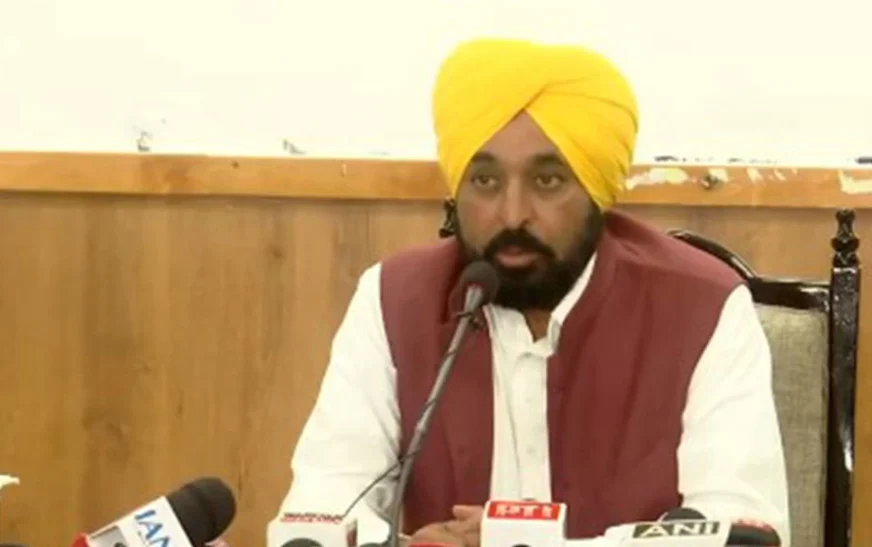
Punjab Chief Minister Bhagwant Mann has hit back hard, calling the raids “BJP’s ED” and accusing the Centre of targeting AAP leaders to destabilise the popular state government. “In one year, this is the third time the BJP’s ED has come to Sanjeev Arora’s house. In the last month, the second time. Yet they haven’t found anything,” Mann posted on X, echoing his earlier attacks on the Centre for using sleuth‑agencies against opposition parties.
National leader Arvind Kejriwal has joined the chorus, accusing the BJP and the Prime Minister’s Office of running a “political vendetta” against AAP after its repeated electoral victories in Delhi and Punjab. He has framed the repeated ED raids—first against himself and senior leaders in Delhi, and now against Arora in Punjab—as part of a broader pattern to “break the backbone” of the party ahead of the 2027 polls.
What this means for Punjab politics
Sanjeev Arora is a key figure in the Punjab AAP cabinet, overseeing the state’s industrial‑and‑investment‑policy portfolio, and the fresh ED‑wave risks denting AAP’s image of “clean governance” that it built after the ouster of the Congress‑BJP‑dominated earlier dispensations. For the BJP, the raids present a tactical win: keeping AAP leaders under investigative‑pressure just as the state gears up for a crucial five‑year‑tenure‑review in 2027.
However, AAP is betting that the public narrative of “vindictiveness” and “central‑agency overreach” will rebound in its favour, especially if the probe does not produce any concrete charge‑sheet‑provoking evidence. The repeated raids on Arora are now framed as a test case: whether the ED‑BJP combo can shake AAP’s hold on Punjab, or whether the party’s base will see the moves as a conspiracy against a pro‑farmers‑and‑pro‑youth‑government.
Broader signal to opposition parties
The Sanjeev Arora raids fit into a larger pattern of ED‑and‑CBI‑driven actions against opposition leaders in the Modi‑era, a pattern that AAP and the INDIA‑bloc have repeatedly highlighted as “politicised investigations.” For the AAP‑centred anti‑BJP‑coalition, the Arora‑episode is both a symbol of persecution and a rallying point to demand independent‑agency‑reform and fair‑play guarantees in the pre‑2027‑poll period.
Unless the ED produces a solid, court‑admissible trail of culpability, the raids may harden AAP’s resolve and its base’s support—but if even a single substantive charge sticks, it could open the door to a full‑blown crisis inside the Punjab government, forcing the party to rethink its internal‑scrutiny‑and‑clean‑image‑policies in a very visible way.