
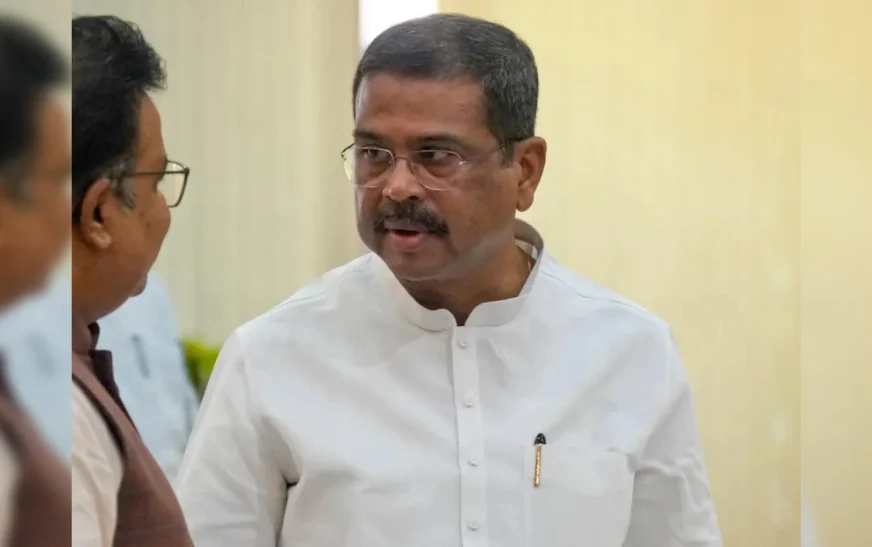
The resignation of Dharmendra Pradhan as India’s Union Education Minister has emerged as one of the most significant political developments of 2026. While the move followed weeks of nationwide protests over alleged irregularities in the NEET-UG examination, political observers believe the decision was not merely a response to public pressure but a carefully calibrated strategy to contain the crisis and shift the government’s focus toward education reforms.
The resignation came after sustained demonstrations led primarily by students and youth groups demanding accountability for repeated examination paper leaks. As protests intensified across the country, pressure mounted on the Centre to take visible corrective action.
Balancing Accountability with Political Stability
According to reports, the government weighed several options before accepting Pradhan’s resignation. Rather than appearing to concede immediately to street protests, the leadership reportedly sought to first announce structural reforms, engage with protest representatives, and project the resignation as part of a broader commitment to restoring confidence in India’s examination system.
By accepting the resignation after consultations and reform announcements, the government attempted to balance two objectives—demonstrating accountability while avoiding the perception that policy decisions were being dictated solely by public demonstrations.
Government Focus Shifts to Education Reforms
The controversy surrounding the alleged NEET paper leak sparked widespread criticism of the country’s examination framework. In response, the Centre announced a series of measures aimed at strengthening exam security, expediting investigations into paper leaks, and introducing stricter legal provisions against examination malpractice.
Officials indicated that restoring public trust in recruitment and entrance examinations had become an immediate priority. Pradhan’s resignation has therefore been interpreted as part of a wider effort to reset the government’s education agenda rather than an isolated administrative decision.
Political Reactions Across Party Lines
The resignation triggered sharp reactions from both the ruling alliance and the opposition.
Leaders from the Bharatiya Janata Party (BJP) described the decision as an example of placing the interests of students and the nation above individual political positions. They maintained that the government remains committed to comprehensive reforms in the education sector.
Opposition parties, meanwhile, argued that the resignation represented only the first step toward ensuring accountability. Several leaders called for deeper institutional reforms, transparent investigations, and stronger safeguards to prevent future examination irregularities.
Youth Movement Played a Decisive Role
The nationwide protests, led largely by students and young professionals, transformed into one of the most visible youth movements in recent years. Demonstrators demanded not only action over alleged paper leaks but also greater transparency, accountability, and fairness in the examination system.
The sustained public mobilisation significantly increased political pressure on the government and ultimately contributed to the decision to replace the education minister. Analysts say the episode underscores the growing influence of digitally connected youth movements in shaping public policy debates.
Looking Beyond the Resignation
While Dharmendra Pradhan’s resignation has eased immediate political tensions, the government’s long-term challenge now lies in delivering meaningful reforms. Students and educators continue to expect stronger examination security, faster investigations into paper leaks, and transparent recruitment processes.
Political analysts believe the resignation may help the government close one chapter of the controversy, but its success will ultimately depend on whether the promised reforms restore confidence in India’s education system. With public scrutiny remaining high, implementation of these reforms is expected to shape the next phase of the national education debate.