

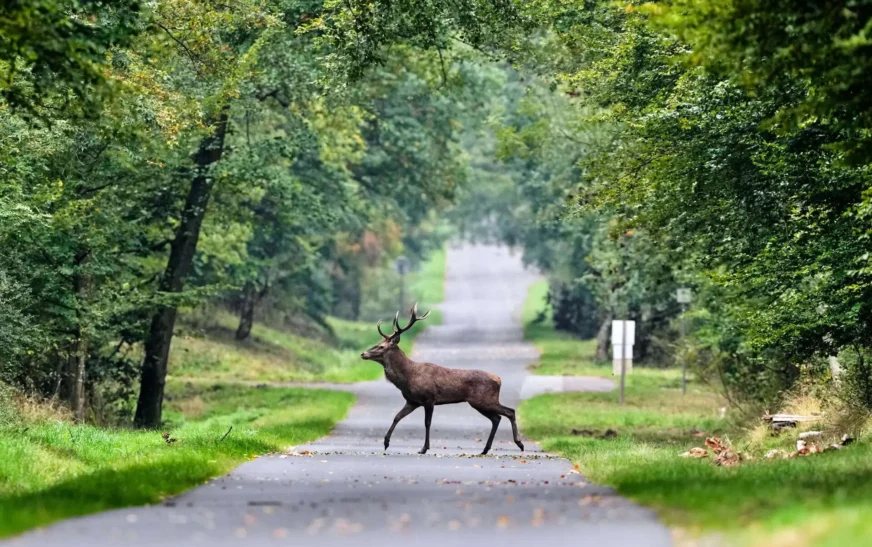
Study Flags Escalating Risk to Global Biodiversity
A new international study has warned that over one-third of animal habitats on land could be exposed to multiple extreme climate events by 2085, if global warming continues at its current pace.
The findings, based on analysis of nearly 34,000 species across 794 ecosystems, highlight a growing risk where heatwaves, wildfires, droughts, and floods increasingly overlap, creating compounded threats to biodiversity.
Heatwaves to Lead, Wildfires Close Behind
The study identifies heatwaves as the most widespread future threat, with projections indicating that by 2050, nearly 74% of animal habitats could be exposed to extreme heat.
Other risks include:
- Wildfires affecting around 16% of habitats
- Droughts impacting nearly 8%
- Flooding affecting about 3%
By 2085, these risks are expected to intensify further, with wildfire exposure alone projected to rise significantly across multiple regions.
‘Compound Effect’ Raises Alarm for Species Survival
Researchers have stressed that the most dangerous aspect is not individual events, but their combined impact.
When multiple extreme events occur in the same or consecutive years, their effects are magnified—leading to sharper population declines and, in some cases, local extinctions.
Historical evidence underscores this risk. During Australia’s 2019–20 wildfires, areas already affected by drought recorded significantly higher losses in plant and animal populations.
Biodiversity Hotspots Under Maximum Threat
The study highlights Amazonia, Africa, and Southeast Asia as regions most vulnerable to these escalating climate risks.
These areas, already rich in biodiversity, could see disproportionate impacts due to the overlap of extreme weather events, potentially disrupting entire ecosystems.
Future Not Fixed, Say Scientists
Despite the alarming projections, researchers emphasise that the outcome is not inevitable.
If global emissions are rapidly reduced and warming is limited, the proportion of habitats exposed to multiple extreme events could drop to as low as 9% by 2085.
This underscores the role of policy intervention and climate action in mitigating long-term ecological damage.
A Growing Challenge for Conservation Planning
The findings signal a shift in how climate risks must be understood.
Rather than gradual changes, conservation strategies now need to account for sudden, overlapping, and high-intensity events that can rapidly destabilise ecosystems.
As climate patterns grow more unpredictable, the study highlights a critical reality: the future of global biodiversity will depend not just on temperature control, but on how effectively nations respond to the rising frequency of extreme events.