
US Announces Operation to Aid Trapped Vessels
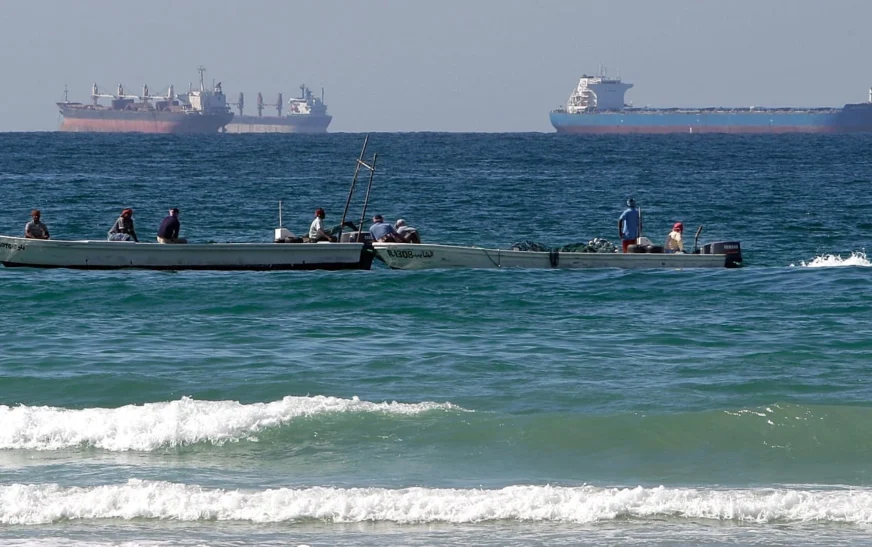
Amid escalating tensions in West Asia, U.S. President Donald Trump has announced a plan to assist commercial ships stranded in the Strait of Hormuz, a critical global oil transit route.
The move comes as hundreds of vessels and thousands of seafarers remain stuck due to disruptions linked to the ongoing U.S.-Israel conflict with Iran.
Washington has described the initiative as a “humanitarian effort” aimed at helping neutral countries whose ships have been unable to move through the strategic waterway.
Tanker Attack Adds to Volatility
Shortly after the announcement, a tanker transiting near the UAE reported being hit by unidentified projectiles, underscoring the fragile security situation in the region.
While no casualties were reported, the incident has heightened concerns over the safety of maritime operations in one of the world’s busiest energy corridors.
A Lifeline for Global Energy Supply
The Strait of Hormuz handles a significant share of global oil shipments, making any disruption a matter of international concern.
The current crisis has already:
- Severely reduced shipping traffic
- Stranded nearly 20,000 seafarers
- Triggered sharp volatility in global oil prices
The U.S. operation is expected to involve a substantial military presence, including naval assets, aircraft, and surveillance systems to ensure safe passage for commercial vessels.
Geopolitical Deadlock Continues
The maritime crisis is closely tied to the broader geopolitical standoff between the U.S. and Iran, with both sides maintaining hardline positions.
Iran has proposed a framework to reopen the strait, including lifting blockades and easing sanctions, but Washington has so far refused to accept the terms, keeping diplomatic progress uncertain.
Shipping Crisis Reflects Wider Conflict
The disruption in Hormuz highlights how regional conflict is spilling into global trade routes.
The situation has evolved into what analysts describe as a “dual blockade”, where restrictions imposed by both sides have effectively paralysed one of the world’s most vital maritime corridors.
A High-Stakes Operation Ahead
While the proposed U.S. intervention could restore partial movement of vessels, risks remain high:
- Continued attacks on ships
- Uncertainty over military escalation
- Fragile diplomatic environment
Any miscalculation could further destabilise the region and deepen the global energy crisis.
A Critical Moment for Global Trade
The Strait of Hormuz crisis is no longer just a regional issue—it has become a global economic concern, affecting energy markets, shipping networks, and geopolitical stability.
As the U.S. moves to intervene, the coming days will determine whether the effort leads to de-escalation—or triggers a new phase of confrontation in an already volatile region.