
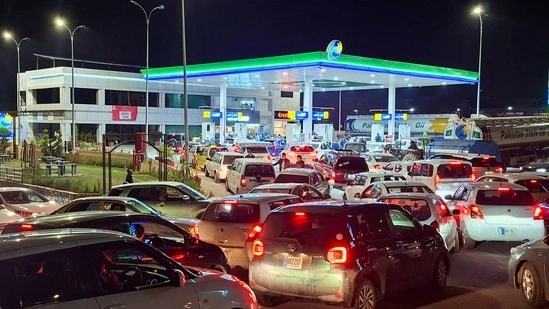
In a significant move to improve road safety and enforce compliance with motor vehicle insurance laws, the Supreme Court of India has directed the Central Government and the Insurance Regulatory and Development Authority of India (IRDAI) to develop a pilot project under which vehicles without valid third-party insurance could be denied fuel at petrol pumps.
The proposal comes after the court expressed concern over the large number of uninsured vehicles on Indian roads, stating that the lack of insurance often delays or denies compensation to victims of road accidents.
Why the Supreme Court Intervened
A Bench of Justice Sanjay Karol and Justice Prashant Kumar Mishra noted that nearly 16.54 crore vehicles, or about 56% of the 30.48 crore registered vehicles in India, are operating without valid third-party insurance. The court described the situation as “shocking” and emphasized that mandatory insurance is essential to protect road accident victims.
What the Pilot Project Proposes
Under the proposed pilot scheme:
- Vehicles without valid third-party insurance may be refused fuel at petrol pumps.
- Fuel supply would resume only after the vehicle owner obtains valid insurance.
- The project will be designed jointly by IRDAI and the Ministry of Road Transport and Highways (MoRTH) before any wider implementation.
The proposal is currently at the pilot stage and has not yet become a nationwide rule.
Other Directions Issued by the Court
The Supreme Court also issued several additional directions aimed at improving road safety and insurance compliance:
- Third-party insurance for new cars will now be mandatory for four years.
- Third-party insurance for new two-wheelers will be mandatory for six years.
- Authorities have been asked to explore technology-based enforcement measures, including linking vehicle databases with Automatic Number Plate Recognition (ANPR) cameras and enabling digital verification of insurance status.
Technology-Driven Road Safety Measures
Apart from the fuel proposal, the court suggested broader technology-based reforms to strengthen traffic enforcement. These include:
- Linking ANPR cameras with insurance databases.
- Issuing automated e-challans to uninsured vehicles.
- Providing handheld devices to traffic police for instant insurance verification.
- Exploring automated toll systems to reduce congestion and improve compliance.
Why Third-Party Insurance Matters
Third-party motor insurance is mandatory under the Motor Vehicles Act. It provides financial protection to victims of road accidents by covering compensation for injury, death, or property damage caused by the insured vehicle.
The Supreme Court observed that widespread non-compliance undermines the legal framework intended to safeguard accident victims and places a significant burden on the compensation system.
What Happens Next?
The Centre and IRDAI have been asked to prepare the pilot project and submit compliance reports to the Supreme Court. The matter is scheduled for further hearing later this month. Until any pilot is implemented and expanded, vehicle owners will continue to purchase fuel under the existing system, but the proposed reforms could significantly change how insurance compliance is enforced in the future.