
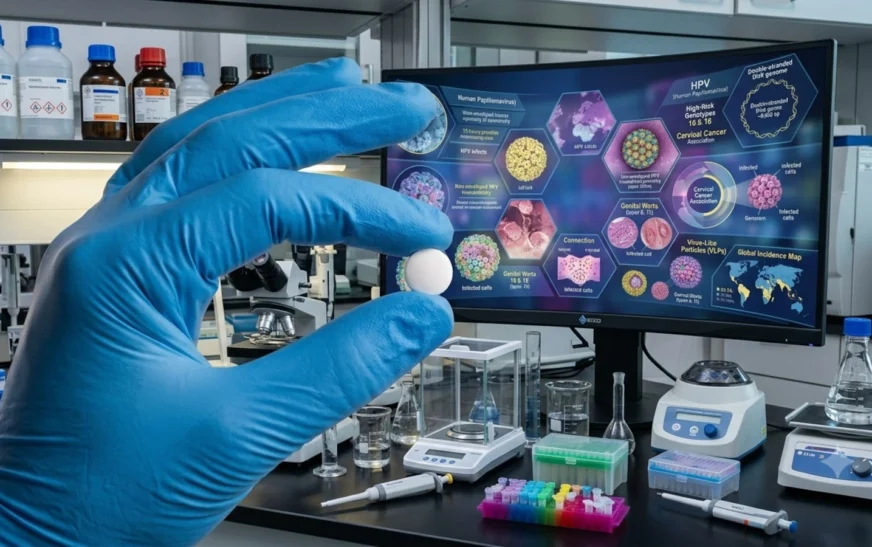
India has taken a major step in the fight against cervical cancer after the Indian Council of Medical Research (ICMR) licensed SHetA2, an investigational anti-HPV drug candidate, to Emcure Pharmaceuticals for further clinical development. If future trials confirm its safety and effectiveness, SHetA2 could become one of the first targeted drug therapies to treat precancerous cervical lesions and stage 0 cervical cancer without the need for surgery.
The development is significant because current treatment for high-grade cervical precancer usually involves surgical procedures that remove abnormal cervical tissue, which can affect future pregnancies in some women. SHetA2 aims to destroy only diseased cells while preserving healthy tissue.
What Is SHetA2?
SHetA2 is a first-in-class targeted anti-HPV therapeutic candidate developed through a collaboration between ICMR’s National Institute of Cancer Prevention and Research (NICPR) and the University of Oklahoma’s Stephenson Cancer Center.
Unlike the HPV vaccine, which helps prevent infection, SHetA2 is designed to treat women who already have HPV-related precancerous cervical lesions or early-stage cervical cancer. It is still an investigational medicine and has not yet been approved for routine clinical use.
How the Drug Works
Persistent infection with high-risk Human Papillomavirus (HPV) is responsible for nearly all cases of cervical cancer.
SHetA2 works by targeting proteins that help HPV survive inside cervical cells. By disrupting these proteins, the therapy causes HPV-infected abnormal cells to die while allowing healthy cervical tissue to remain unaffected. This targeted approach could reduce the need for invasive procedures.
Why This Could Be a Major Breakthrough
At present, women diagnosed with CIN2, CIN3, or stage 0 cervical cancer are often treated with procedures such as:
- Loop Electrosurgical Excision Procedure (LEEP)
- Cold knife conization
- Other tissue-removal procedures
While these treatments are highly effective, they involve removing part of the cervix and may increase the risk of pregnancy-related complications in some women.
If SHetA2 succeeds in clinical trials, it could provide:
- A non-surgical treatment option
- Better preservation of healthy cervical tissue
- Reduced risk of complications associated with surgery
- Improved quality of life for patients diagnosed at an early stage
Current Status of the Drug
Although laboratory and preclinical studies have shown encouraging results, SHetA2 remains under clinical development.
The licensing agreement allows Emcure Pharmaceuticals to carry out:
- Large-scale clinical trials
- Manufacturing development
- Regulatory approval processes
- Future commercialization, if approved by regulators
Researchers caution that several stages of human clinical testing are still required before the medicine can become available to patients.
Why Cervical Cancer Prevention Still Matters
Despite this promising development, doctors emphasize that HPV vaccination and regular cervical screening remain the most effective ways to prevent cervical cancer.
India records tens of thousands of new cervical cancer cases each year, making it one of the country’s leading cancers among women. Early detection through screening and timely treatment of precancerous lesions remain essential for reducing deaths from the disease.
A Milestone for Indian Medical Research
The licensing of SHetA2 marks an important achievement for India’s biomedical research ecosystem. If future clinical trials confirm its effectiveness, the drug could transform the treatment of HPV-related cervical disease by offering a less invasive alternative to surgery.
While SHetA2 represents a promising breakthrough, experts stress that it should not yet be considered an approved treatment. Until clinical development is complete, women are encouraged to continue following established preventive measures, including HPV vaccination, routine cervical screening, and timely medical care for abnormal test results.