
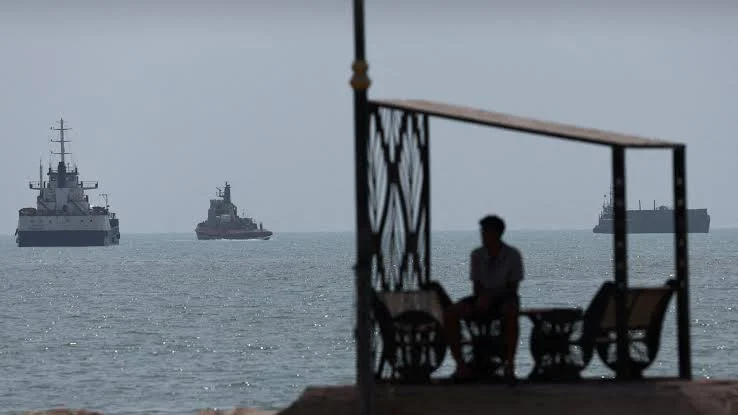
The US-Iran conflict has entered a dangerous new phase after American forces struck Iranian military positions on Larak Island in the Strait of Hormuz, marking the first reported direct US attack on Iranian territory in several weeks. Washington said the strikes targeted Iranian launchers that were allegedly being prepared to deploy sea mines into the strategically vital waterway.
The development is significant because the Strait of Hormuz remains one of the world’s most important energy routes. Any prolonged disruption could affect oil supplies, shipping costs and global markets. Following the latest strikes, Brent crude rose above $90 a barrel as investors reacted to the renewed military escalation.
From an analytical perspective, the Larak Island attack demonstrates how the Strait of Hormuz has become the central pressure point in the US-Iran confrontation. Washington says its military action was intended to prevent Iran’s Revolutionary Guard from deploying mines that could threaten commercial shipping. Iran, however, has viewed US military operations around the waterway as a direct provocation.
The Iranian response has already widened the confrontation. Iran’s Revolutionary Guard said it launched ballistic missiles at US military bases in Jordan following the American strikes. The exchange raises concerns that the conflict could spread beyond Iran and the immediate Gulf region.
The latest escalation also comes against the backdrop of President Donald Trump’s repeated claims about American control of the Strait of Hormuz. Trump has previously said he could declare the waterway US territory, a statement that has been rejected by Iran. The Strait, which lies between Iran and Oman, is governed by international maritime arrangements rather than US sovereignty.
For global markets, the biggest concern is shipping. Commercial traffic through Hormuz has already fallen significantly amid security fears. Any further disruption could push energy prices higher and increase transportation and insurance costs.
For India, the situation deserves particular attention because the country is heavily dependent on imported crude oil. A prolonged rise in international oil prices could increase India’s import bill and place pressure on inflation, transportation costs and the wider economy.
The conflict also presents a diplomatic dilemma for Washington. The Trump administration has simultaneously used military pressure and economic sanctions while keeping the possibility of negotiations open. The latest strikes, however, make a diplomatic breakthrough more difficult and increase the risk of further retaliation.
The immediate question is whether the Larak Island operation will remain a limited military action or become the beginning of another sustained US-Iran escalation. Iran’s response suggests that Tehran is unwilling to absorb the strikes without retaliation, while Washington appears determined to prevent threats to shipping in Hormuz.
The reported claim that Iran’s Kharg Island oil hub was being destroyed has added further uncertainty, although Reuters found no independent confirmation of such an attack and reported that imagery accompanying Trump’s statement appeared to be AI-generated.
Ultimately, the latest developments show that the Strait of Hormuz is no longer simply a shipping route at the centre of an economic dispute. It has become a strategic flashpoint capable of affecting military calculations, global energy markets and international diplomacy simultaneously.
The coming days will therefore be crucial. If Washington and Tehran fail to contain the latest escalation, the consequences could extend well beyond the Middle East.