
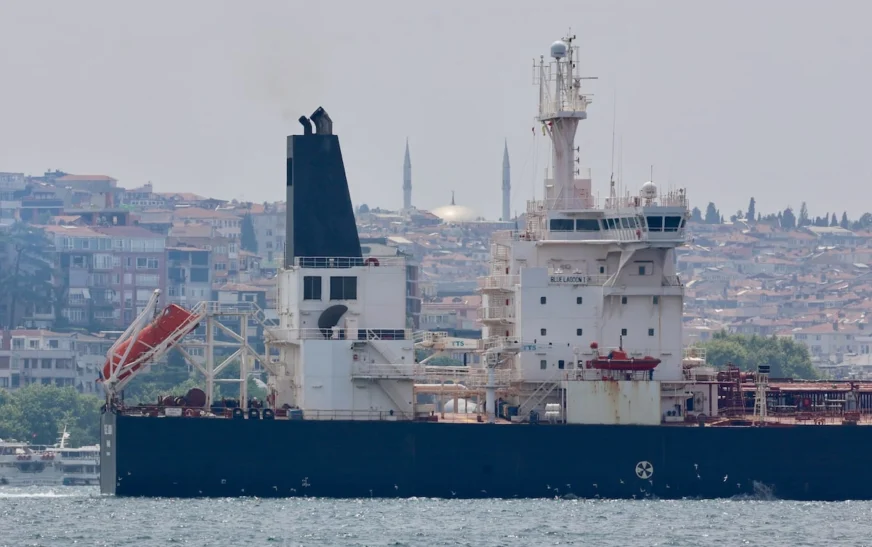
Yemen’s Iran-backed Houthi rebels have claimed responsibility for missile and drone attacks on two Saudi oil tankers transiting the Red Sea, marking a significant escalation in regional tensions and raising fresh concerns about the security of one of the world’s busiest maritime trade routes. The attacks come just days after the group announced a maritime embargo targeting Saudi-linked shipping.
According to Houthi military spokesperson Yahya Saree, the targeted vessels were identified as the Encelia and Layla. The group alleged that the ships had violated its newly announced naval restrictions and warned that additional vessels connected to Saudi Arabia could face similar attacks if they continued operating in the region.
Fire Reported on One Tanker
Maritime authorities reported that the master of one tanker informed them that an unknown projectile struck the vessel, causing a fire onboard. Crew members immediately began firefighting operations, and initial reports indicated there were no casualties among those onboard. The incident occurred near the Saudi port of Jizan, where authorities continue to monitor the situation.
The Houthis said the attacks were carried out in retaliation for what they described as a Saudi blockade on Yemen and a recent strike on Sanaa International Airport. Earlier this week, the group declared a maritime embargo against Saudi Arabia and warned commercial shipping companies to avoid Saudi ports in the Red Sea.
Threat to a Critical Global Shipping Route
The attacks have intensified fears over the security of the Bab el-Mandeb Strait, the strategic waterway connecting the Red Sea to the Gulf of Aden and the Suez Canal. The route is one of the world’s most important shipping corridors, handling a significant share of global oil exports and commercial cargo moving between Europe, Asia, and Africa.
Any prolonged disruption in the region could force shipping companies to reroute vessels around the Cape of Good Hope, increasing transit times, fuel consumption, freight costs, and insurance premiums.
Oil Markets React to Rising Risks
Global energy markets responded swiftly to the developments. Oil prices climbed to their highest levels in more than six weeks as traders assessed the growing risks to two major energy chokepoints—the Red Sea and the Strait of Hormuz. Analysts warned that simultaneous disruptions in both waterways could significantly affect global crude oil supplies and international trade.
Shipping companies are also reviewing security measures and voyage plans, with some operators considering alternative routes until the security situation becomes clearer.
International Concern Mounts
The latest attacks have drawn international attention, with governments and maritime security agencies closely monitoring developments. The United States and several allies have condemned threats to commercial shipping and reiterated the importance of protecting freedom of navigation in international waters. Regional security analysts warn that continued attacks could further destabilize the Middle East and increase the risk of a broader confrontation involving Saudi Arabia, Iran, and their regional allies.
A New Flashpoint in the Middle East
The Houthis’ latest claims highlight the growing risks facing commercial shipping in the Red Sea. With Saudi oil tankers now reportedly under direct attack, concerns are mounting over the stability of global energy supplies and maritime trade. As military tensions continue to rise across the Middle East, governments, shipping firms, and energy markets are expected to remain on high alert in the coming days.