
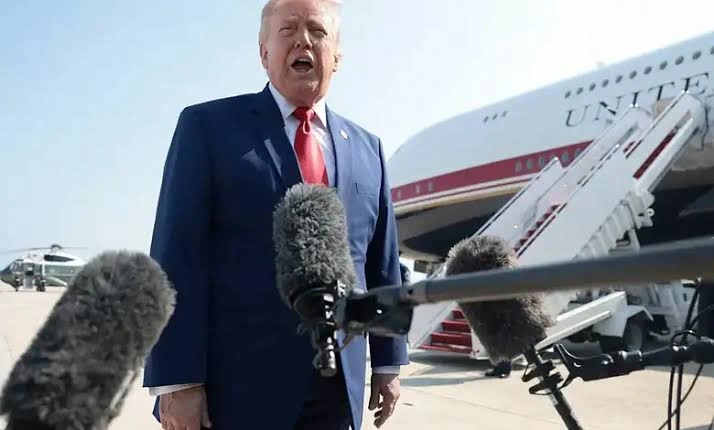
US President Donald Trump has announced that a new round of negotiations with Iran will begin, signaling a renewed diplomatic effort to ease tensions in the Middle East. Speaking to reporters aboard Air Force One, Trump said talks would commence on Monday, adding that regional powers had urged Washington to prioritize diplomacy over military action.
The announcement comes after heightened tensions over the Strait of Hormuz, global energy security, and Iran’s nuclear programme, with Gulf countries stepping up mediation efforts to prevent further escalation.
Gulf Nations Encouraged Diplomacy
According to Trump, Saudi Arabia, the United Arab Emirates (UAE), and Qatar requested that the United States hold off on planned military strikes because they believed a diplomatic agreement remained possible.
“They think there’s a deal,” Trump said, expressing optimism that negotiations could produce progress on reopening the Strait of Hormuz and addressing concerns over Iran’s nuclear programme.
Focus on the Strait of Hormuz
A major issue in the negotiations is the Strait of Hormuz, one of the world’s most important maritime trade routes.
The waterway handles a significant share of global crude oil shipments, and disruptions in recent months have raised concerns over energy supplies and international shipping. Trump suggested that resolving issues related to Hormuz would be a key step toward broader regional stability.
Nuclear Programme Also on the Agenda
Trump indicated that discussions would also focus on Iran’s nuclear programme, describing the objective as achieving “denuclearization.”
While he expressed confidence about the negotiations, he declined to set any deadline for reaching a final agreement, saying, “We’ll see how it goes.”
Military Action Paused
The diplomatic initiative follows Trump’s decision to suspend previously planned military strikes against Iran in anticipation of renewed negotiations.
Officials said the pause reflects Washington’s preference to explore diplomatic options before considering further military measures. However, US authorities have maintained that all options remain available if talks fail.
Regional and Global Significance
The outcome of the negotiations will be closely watched by governments and global markets.
A successful agreement could ease tensions in the Gulf, improve the security of commercial shipping, stabilize global oil supplies, and reduce uncertainty affecting international trade. Conversely, failure to reach a breakthrough could renew concerns about regional conflict and energy market volatility.
What Comes Next?
Negotiators are expected to begin discussions through diplomatic channels, with Gulf nations continuing to play an important mediating role.
While President Trump has expressed optimism about reaching an agreement, the negotiations are still at an early stage. Any final deal would need to address complex issues including maritime security, sanctions, and Iran’s nuclear activities before a lasting resolution can be achie