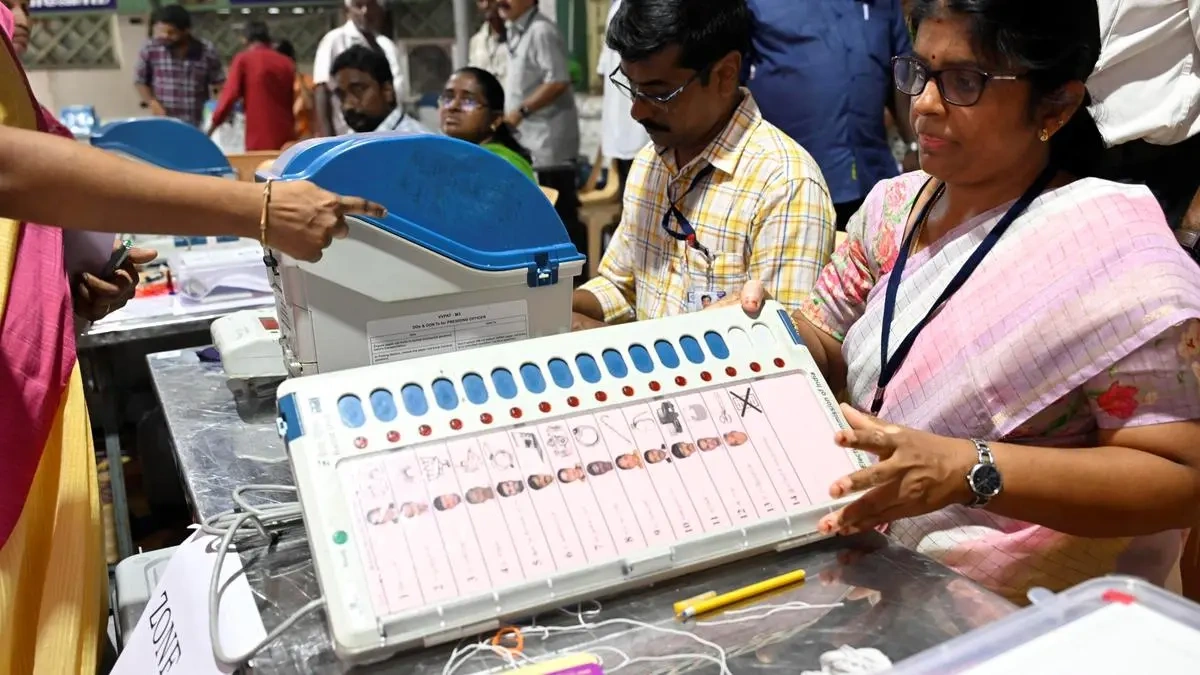

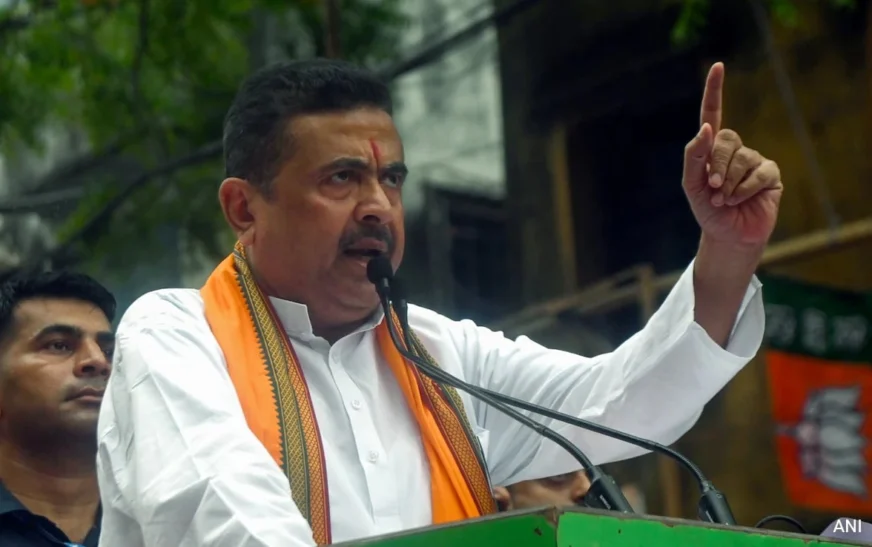
Nandigram, one of West Bengal’s most politically charged Assembly seats, has once again delivered a verdict in favour of BJP’s Suvendu Adhikari, reinforcing the area as his stronghold even as the Trinamool Congress‑led opposition mounted a coordinated effort to reclaim the seat. The Nandigram Election Result 2026 shows that Adhikari has successfully defended the constituency, though the margin over the TMC‑backed candidate has narrowed compared with the razor‑thin 2021 win when he defeated then‑Chief Minister Mamata Banerjee by just 1,956 votes.
Result and margin in Nandigram 2026
Suvendu Adhikari, BJP’s Leader of Opposition and high‑profile heavyweight, has retained the Nandigram seat, consolidating the BJP’s grip on this iconic turf that symbolises the party’s breakthrough in TMC‑heartland South Bengal. The 2021 result—1,10,764 votes for Adhikari and a 48.5 per cent vote share—had already transformed Nandigram into a BJP‑brand fortress, and the 2026 outcome indicates that the Leader of Opposition continues to enjoy deep organisational penetration and voter‑loyalty in the Tamluk‑belt.
The TMC fielded local leader Pabitra Kar as its main challenger, aiming to reverse the 2021 shock‑loss and signal that the BJP’s hold on Nandigram can be broken. Early‑round trends and party‑sourced updates suggested a tight contest, with the TMC closing the gap compared with 2021, but not enough to flip the seat outright. The result will be read as a prestige‑victory for Adhikari while giving the TMC enough comfort to claim that the BJP’s dominance in Nandigram is no longer invincible.
Why Nandigram matters in Bengal politics
Nandigram is more than a single constituency; it functions as a political barometer for the TMC‑BJP balance in South Bengal, where land‑rights, agrarian‑tenure, and caste‑coalition narratives converge. The 2021 defeat of Mamata Banerjee in Nandigram had already marked a symbolic end to the idea that the CM could not be beaten in her own backyard, and the 2026 result cements the seat as a BJP‑anchored bastion even as the TMC tries to re‑establish organisation‑control at the panchayat and block‑level.
For the BJP, holding Nandigram with a solid margin validates its strategy of building a grassroots‑anchored, identity‑centric base in previously TMC‑dominated rural belts. For the TMC, the fact that the gap has narrowed suggests that the party’s intensified local‑campaigns, alliance‑tinkering, and anti‑BJP‑narratives can dent but not yet dislodge the opposition’s hold.
Key campaign issues and voter‑behaviour
In Nandigram 2026, the contest centred on three overlapping themes: land‑rights and agrarian‑security in the post‑acquisition‑era, continuity versus change in developmental‑governance, and the personal‑charisma of Suvendu Adhikari, whose long‑standing local‑influence rivals the CM’s statewide‑brand. The BJP leaned on arguments about diversifying the local‑economy, improving transport‑infrastructure in the Haldia‑Nandigram‑Kanthi corridor, and protecting the region from what it framed as anti‑farmers’ policies, while the TMC focused on welfare‑schemes and the threat of BJP‑centred central‑overreach.
The seat recorded a high turnout, consistent with the state‑wide figures, indicating that even in a high‑profile, politically‑hypercharged constituency voters were keen to register their preferences on both performance and identity. The BJP’s control of most gram‑panchayats and both panchayat‑samitis in Nandigram‑I and Nandigram‑II blocks gives Adhikari an organisational advantage that the TMC has been trying to erode through targeted local‑level mobilisation.
Implications for Suvendu Adhikari and the BJP‑TMC face‑off
The Nandigram Election Result 2026 cements Suvendu Adhikari’s status as BJP’s central figure in Bengal and the main challenger to Mamata Banerjee’s leadership, while also signalling that the BJP’s hold on the seat is consolidating rather than weakening. For the BJP, successfully holding Nandigram with a comfortable margin allows the party to project him as a credible future‑Chief‑Minister‑calibre leader and to use the constituency as a template for replicating success in other TMC‑strongholds.
For the TMC, the outcome in Nandigram sets the stage for a recalibration of its strategy in South Bengal: more local‑level cadre‑building, sharper identity‑centric messaging, and stronger candidate‑profiles in seats where the BJP’s organisational‑edge is most pronounced. How both sides interpret this “fortress‑that‑held‑but‑narrowed” verdict in Nandigram will shape the contours of the 2031 West Bengal Assembly election and the broader Modi‑Mamata‑Adhikari triangle.